Tag Archives: Amy Hesketh

Dead But Dreaming, Part 3: Ordeal

by Rich Moreland, May 2016

The iconic scenes in Dead But Dreaming focus on the ordeal of the Irish traveler.

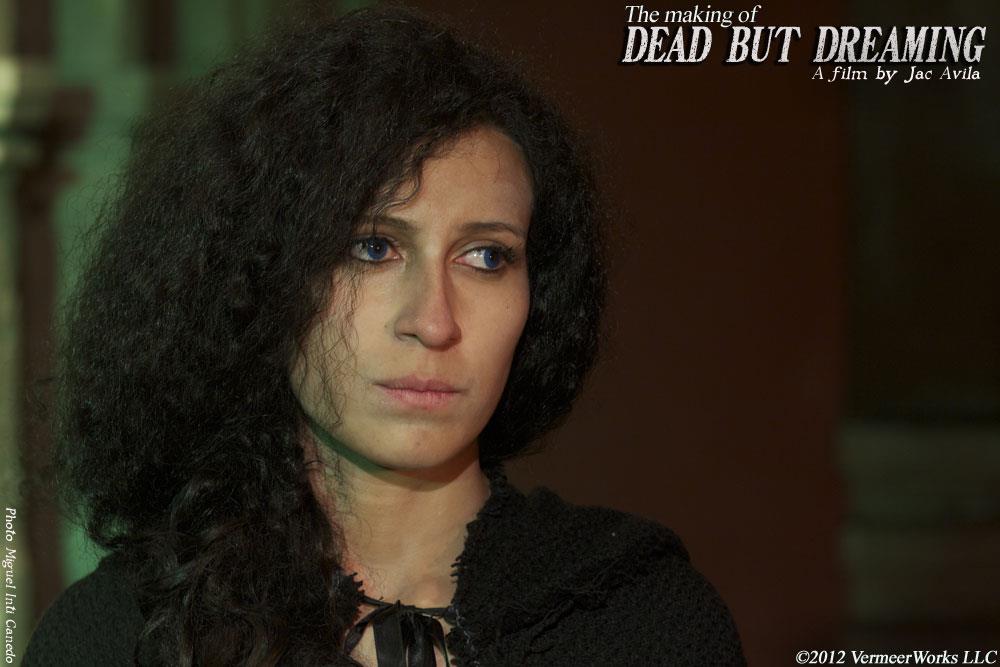
Kudos are extended to Amy Hesketh for her expression of Moire’s suffering.

DBD00471018

*          *          *

Public Humiliation

The Irish traveler is arrested and sentenced, though we see no trial. She will be scourged and garrotted, the Spanish practice of death by strangulation.

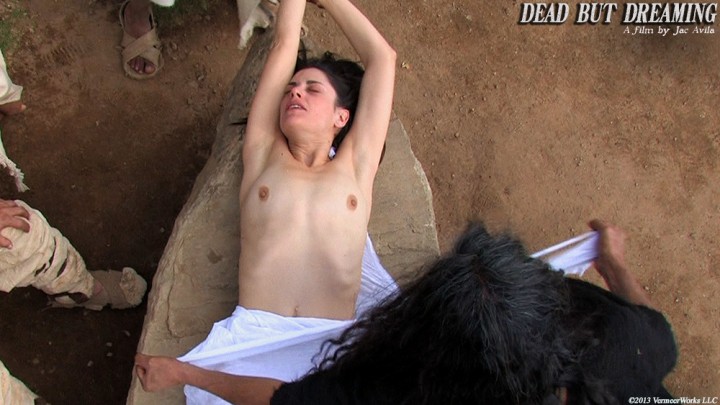
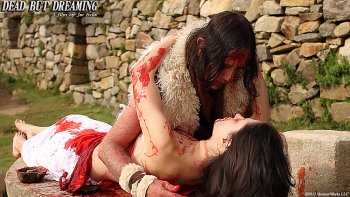
Before her punishment, Moire is brutally raped by the guards in an intense scene played beautifully by Amy Hesketh.
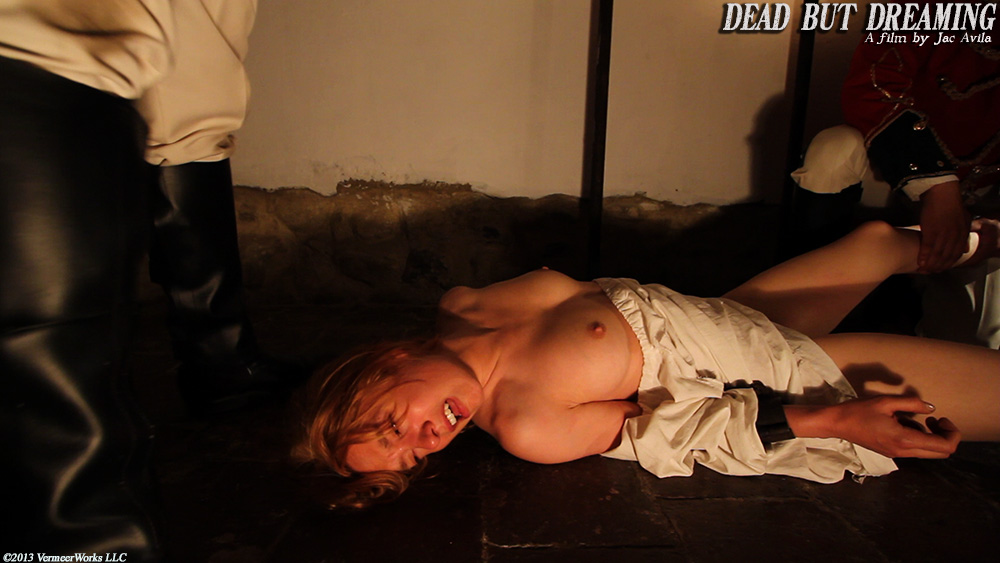
DBD00375811

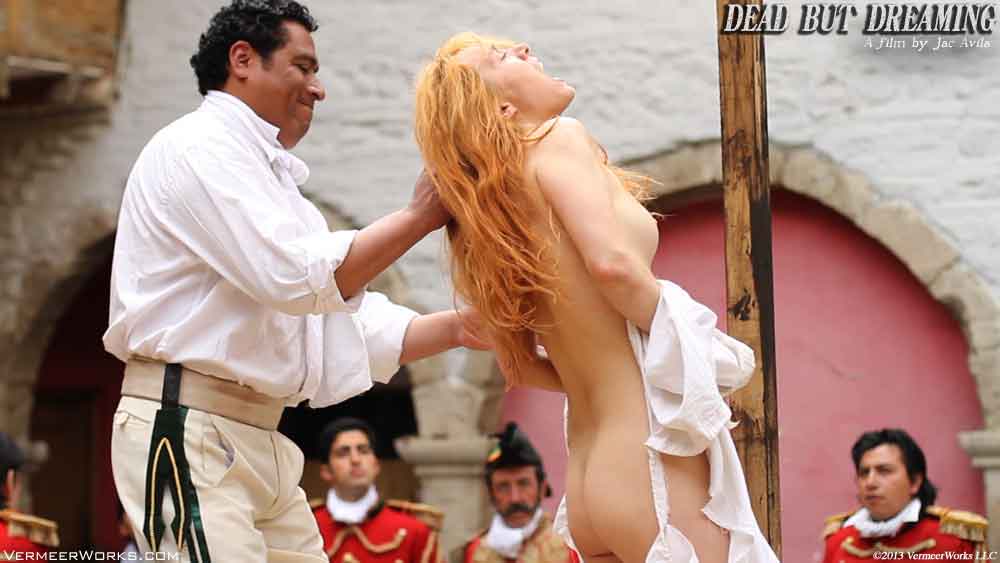
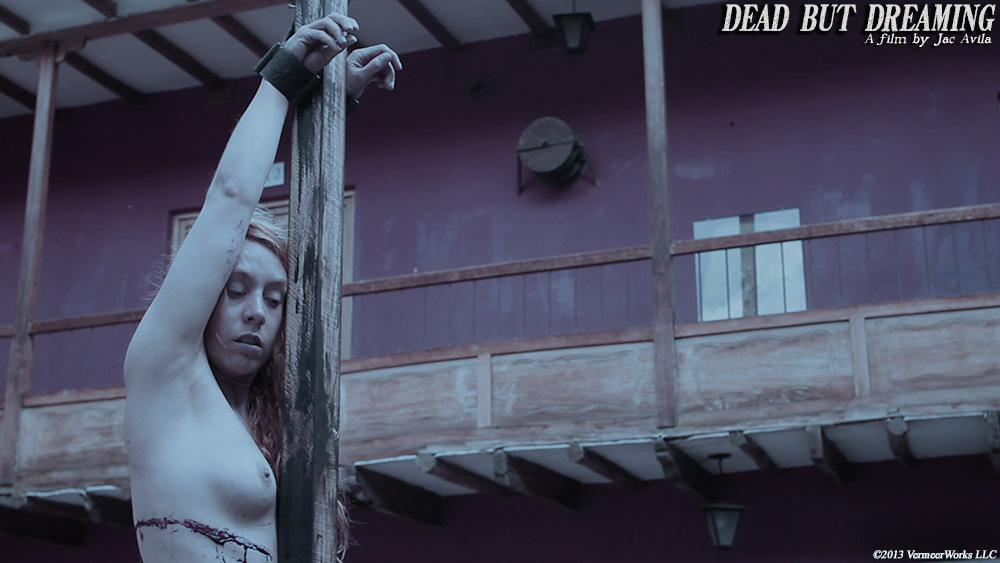
To intensify her humiliation, Moire will be chained to a whipping post in a pre-death ritual carried out on a public stage. The scene is political, of course, Moire is sentenced for crimes against the state and the authorities are present. More important, however, is the sadomasochism that reinforces the prevailing vampirism of the film.
DBD00351615

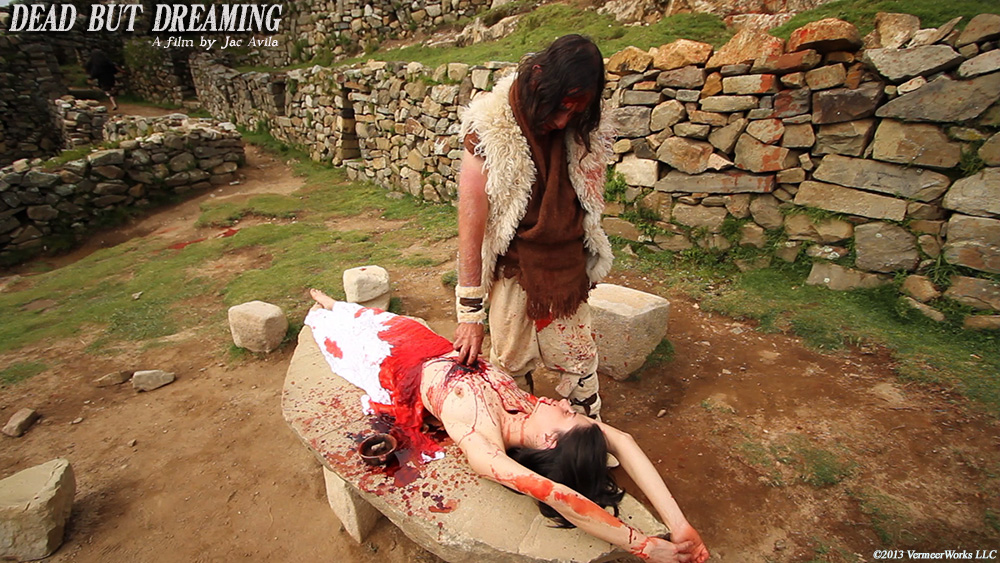
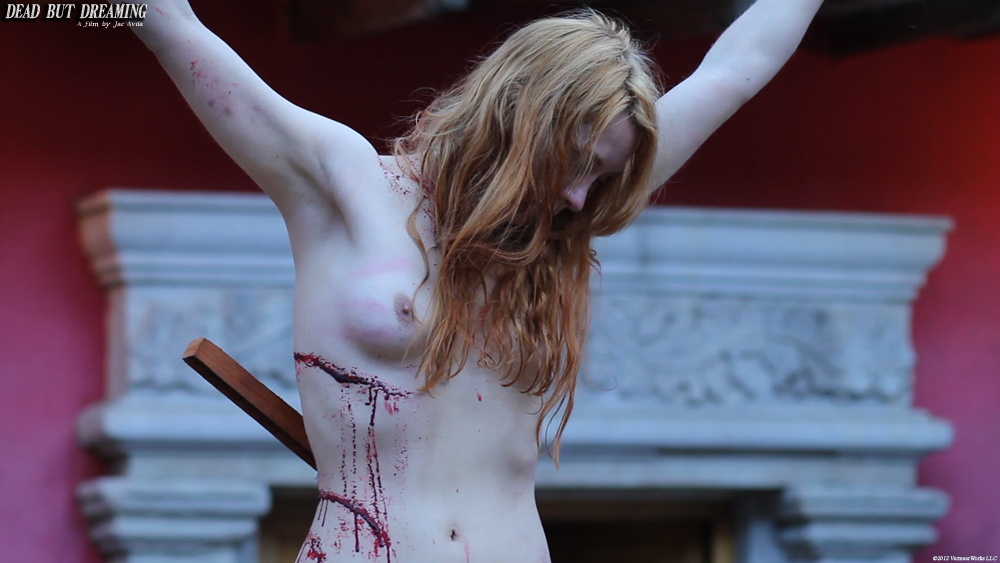
Moire is brought out in flimsy white cloth that is stripped away once she is secured to the post. During the punishment, the executioner takes a break for water and offers some to the prisoner, a show of compassion in a macabre setting. It’s a precursor for her next drink after nightfall.

Incidentally, BDSMers will love the real marks on the victim’s body. In fact, the fake blood is unnecessary.
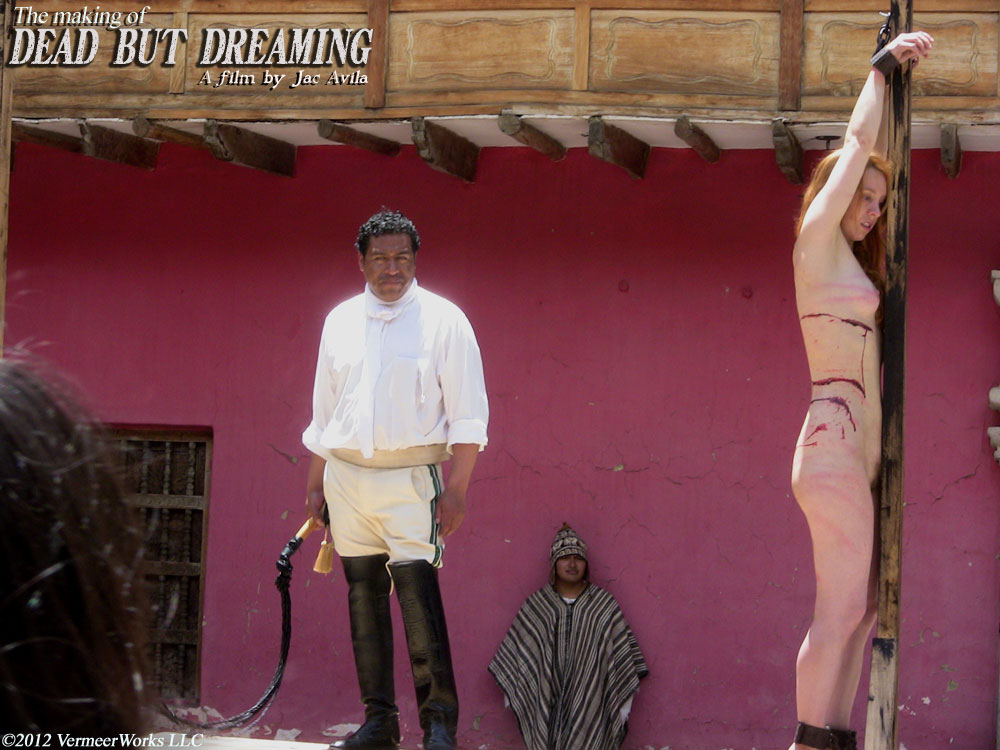
Real marks and a salute to Amy Hesketh's courage in the pursuit of her art.

Real marks and a salute to Amy Hesketh’s courage in the pursuit of her art.

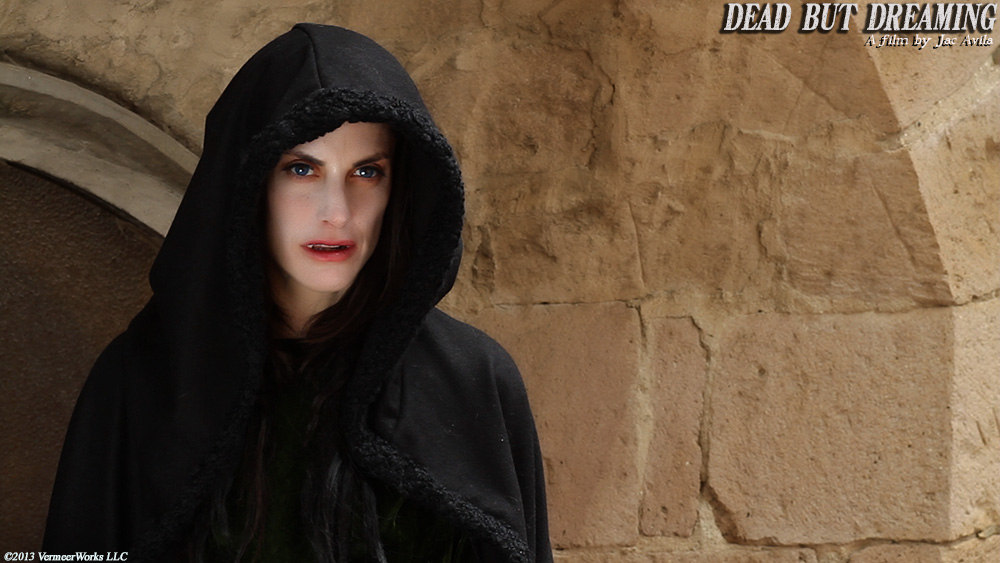
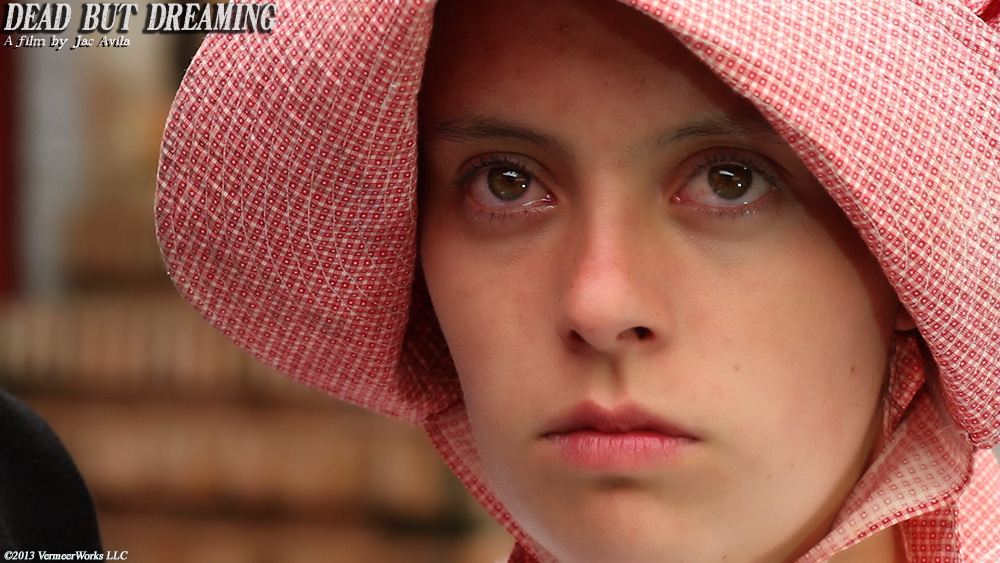
Among the onlookers are Ferenc and Varna, who weeps at the scene. Nahara in her familiar cloak and hood, drifts about, setting her sights on another vampire lover once the state’s duties are completed.
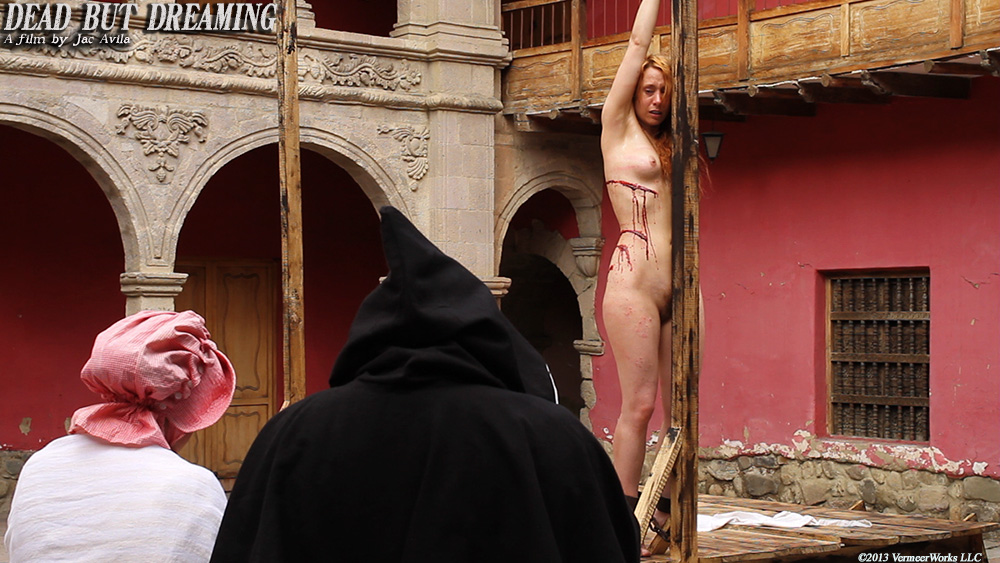
Moire notices Varna and in the crowd.

Moire looks painfully at Varna and Ferenc in the crowd.

The Irish traveler is left suspended at the post until dusk, reminding the viewer of Aphrodisia’s abandonment when the onlookers at her punishment drift away.DBD00564600
During the course of the narrative, both women are similarly brutalized, establishing parallels that are vital to the story.

Most importantly, each lives on in an alternative universe, telling Varna that superstition is its own reality.

DBD01003201

Inside You

Slipping by the guard after dark, Nahara visits Moire in her cell. She is there to help but not in the way the Irish traveler expects.
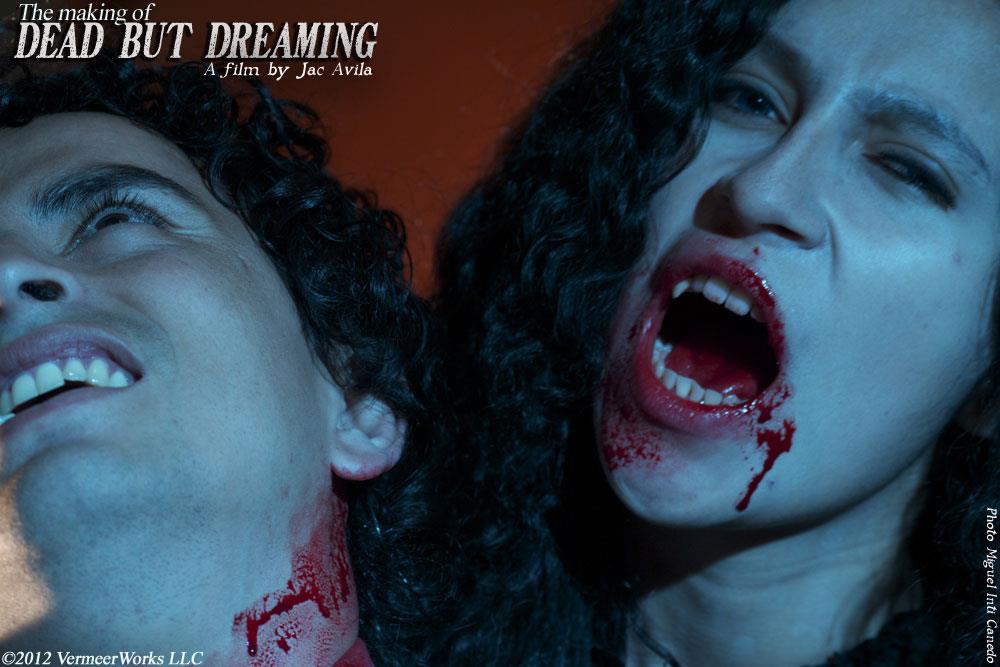
nahara and the guardCaressing a beaten and weak Moire, Nahara persuades her to relax whereupon she bites Moire’s shoulder just behind her neck. Apologizing, the vampire says, “I need your blood.”

As a parallel to Moire, Aphrodisia also provides nourishment for Asa after his staff gouges the holes in her chest. These vampires consume the sexual power of their kin.

Nahara explains she can’t stop the execution and in a moment of dark humor a smiling Moire thanks Nahara for keeping her company, “even if I was only your dinner . . . Or, am I breakfast?”

Nahara keeps the wit going with, “You have an odd sense of humor.”

She’s Irish, Moire jokes, and wants to know if Nahara is French, a clever reference to 1803 when the Irish planned to assist the French against the English during the Napoleonic Wars.

Enough of the smiles, it’s back to work.
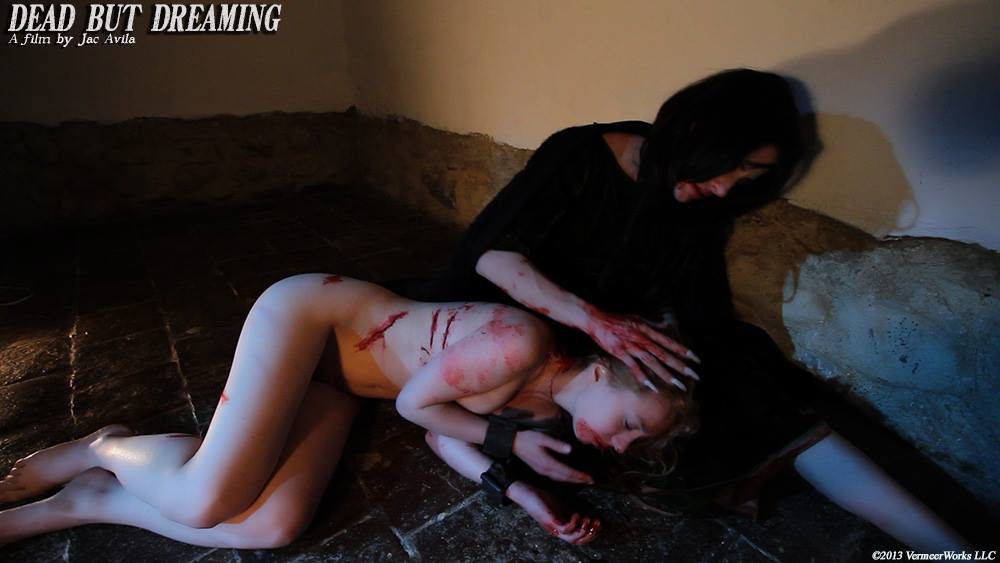
Moire licks Nahara's blood from her hands as the feeding ritual is completed.

Moire licks Nahara’s blood from her fingers as the feeding ritual is completed.

Encouraging Moire to feed, Nahara rips open her own wrist with her teeth. “Drink as much as you can,” Nahara says.

Moire’s first drink of the day was a brief glimpse at survival that gets her to this moment. Now her second drink begins the transformation. Reborn a vampire, Moire can now face death without fear.

“You have me inside you,” Nahara assures her.

This line is steeped in meaning. Will there be a sadomasochistic sexual relationship between Moire and Nahara like Asa’s has with Aphrodisia? Does the statement imply that all vampires are bisexual?

Does it mean that Nahara now controls Moire?

Or, is it a satirical reference to the Christian belief in the living God?

Crimes Against the State

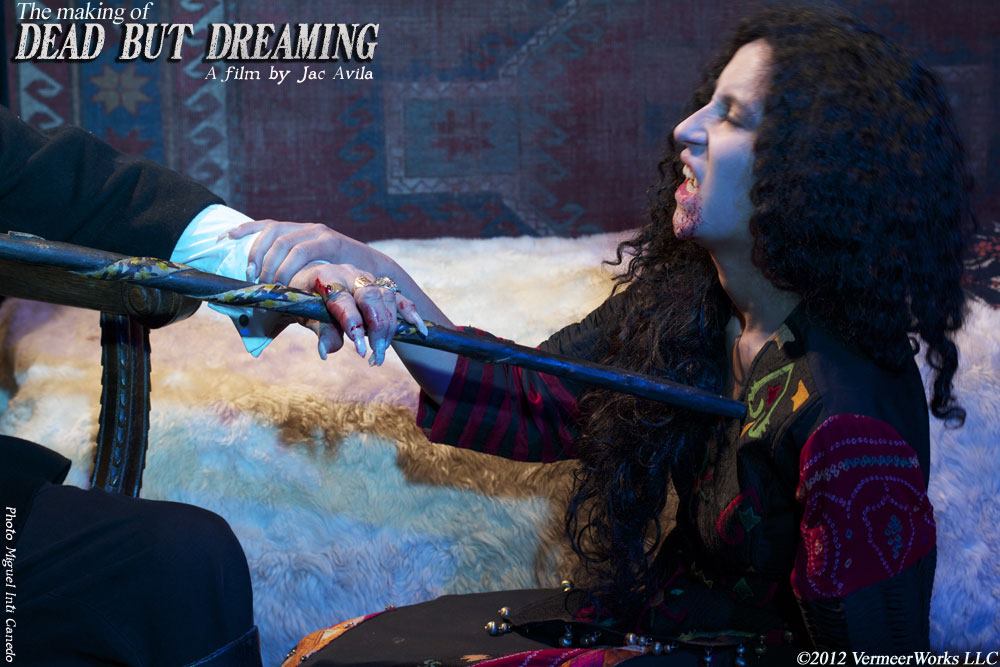
The next day the crowd returns and a naked Moire is paraded out once again. Her arms are extended and tied to posts on the raised platform where she was punished the day before. Her ankles are chained together to create a visual crucifixion.

The death sentence is read. The Viceroy of Peru has sanctioned the execution.

img-1409813635

The executioner puts the noose around Moire’s throat and slowly ends her life with one brutal twist following another. In a nice touch, blood spurts from Moire’s mouth. Vampire’s morning after, anyone?

In this emotionally draining scene, Ferenc consoles his niece. His words are futile, deadbutdreaming-amyof course, because Varna will take up Moire’s struggle, just as the next feminist generation replaces the former. However, she will fall under suspicion. Once a woman leaves the convent and acts on her own, she is marked. Varna has yet to suffer the lash’s retribution, but the feeling is she will someday.
Say Good-bye

Later Varna visits her uncle who is studying a book about vampires. He asks about Moire’s execution because he has no memory of it which he blames on the presence of a Lamia.

His niece relates that Nahara came up to her while she prayed before Moire’s corpse, still bound in its death climax.
DBDTeaseVidCaps03161312“I have a pact with your friend,” Nahara says. “Now say good-bye and go.”

Ferenc suspects Nahara is a Lamia and translates her name into “light.” It’s Christianity turned on its head.

Varna dismisses his superstitions.

A scene shift to Asa’s lair informs the viewer the battle over Moire is underway. Nahara made the Irish traveler into “one of us . . . a little sister,” Asa tells Aphrodisia. “It will be easy to make her come to us.” A new pawn in a vampire world of adversaries is ready for use.
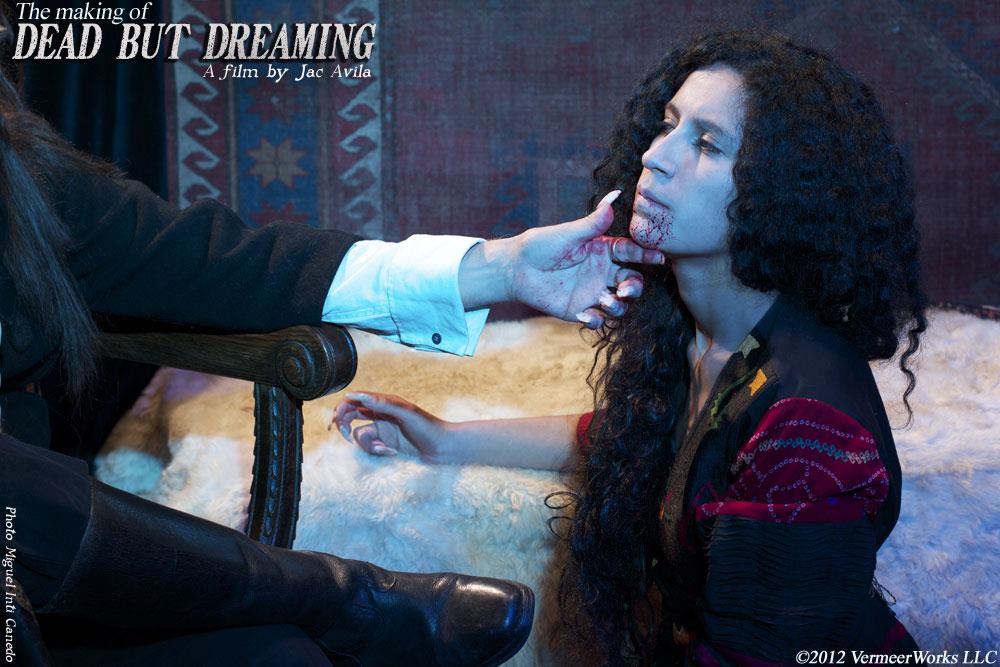
Aphrodisia once a little sister herself

Asa gently touches Aphrodisia, once a little sister herself

In a quick shift back to the execution site, Varna informs Nahara she is leaving because she knows Moire can’t hear her.

In a pivotal moment, Nahara drops her guard. Preparing Varna for what may become her own fate, the Lamia whispers, Moire “can hear you.”

The Irish traveler is “dead but dreaming,” suspended in a vampire purgatory.

*          *          *

The scourging and execution segments of Dead But Dreaming may be over-the-top for some viewers, but this is Amy Hesketh’s artistic style, her performance art.

We may want to turn away, but when Amy offers herself as the vicitm of a sexualized brutality, we can’t deny our urge to look. Gazing into our own soul, we are forced to revisit our personal perspectives on good and evil. Is that not what film is about?
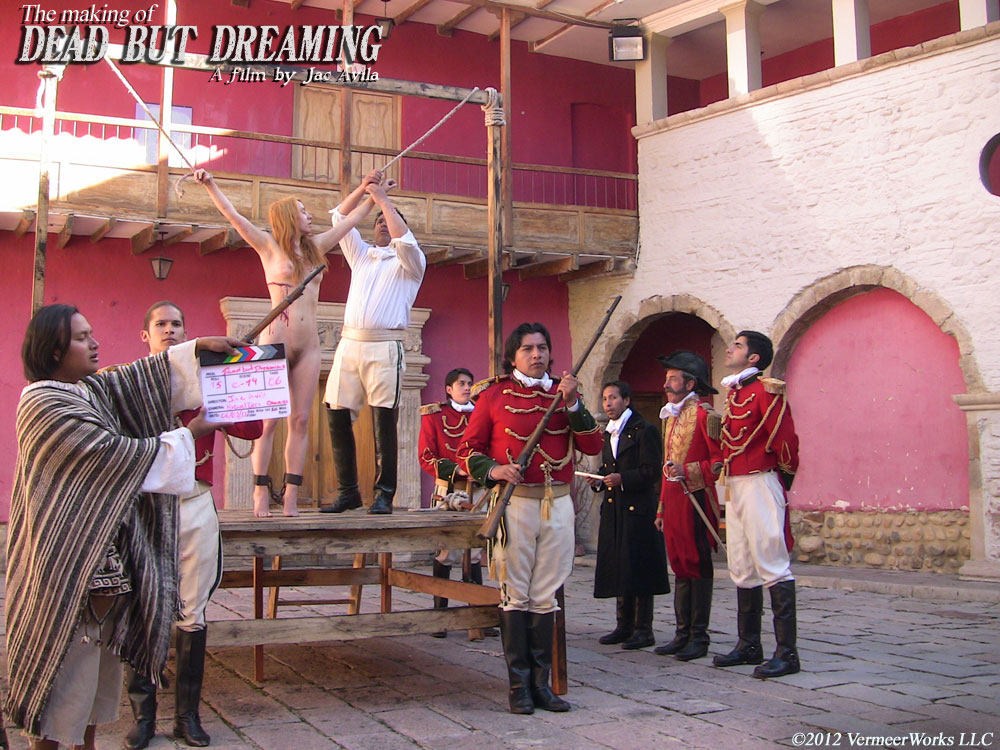
A reminder for those who willfully suspend their disbelief in this intense moment, it's just a movie and a good one at that!

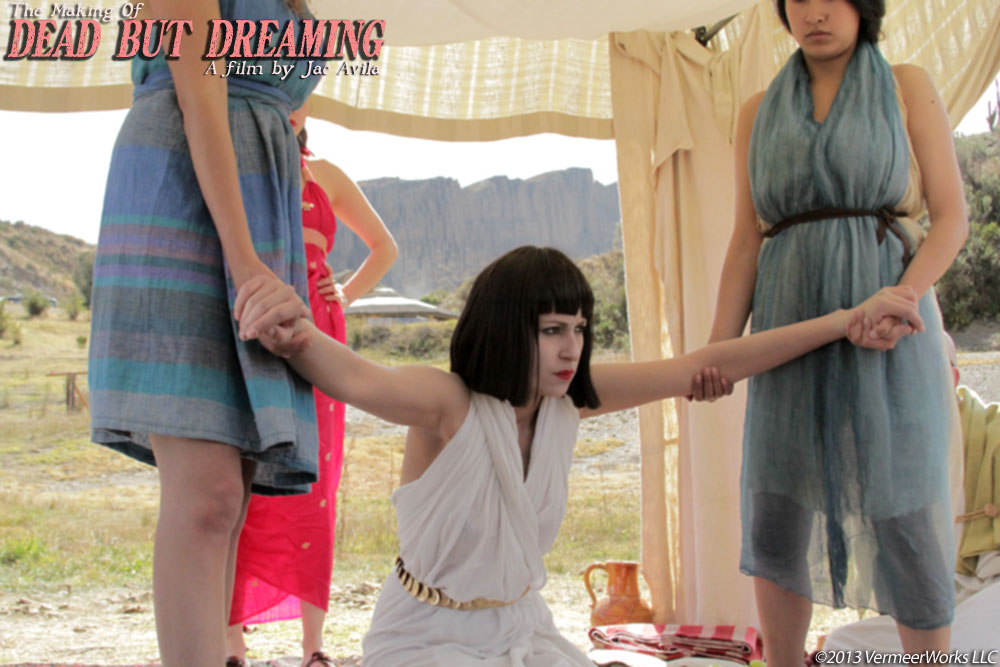
A reminder for those who are swept up in the realism of Moire’s fate, it’s a movie of course, and that requires several days and many takes, as we see here.

*           *          *

For more reviews of Dead But Dreaming and to learn more about Amy Hesketh, visit her website and her blog.
 

Leave a comment

Filed under Uncategorized

Dead But Dreaming, Part 2: Lamia

by Rich Moreland, May 2016

Joining Amy Hesketh in Dead But Dreaming is Bolivian Veronica Paintoux who began her career with Pachamama Films in the early 1990s and La Paz native Mila Joya is who has shot for the studio since 2010. She stars with Amy in Maleficarum, a film directed by Jac Avila.

These three provocative women, along with Claudia Moscoso as Varna, infuse feminism into the vampire landscape, giving Dead But Dreaming an empowered pro-woman statement.

Claudio Moscoso

Claudio Moscoso

*          *          *

Throughout recorded history, women have been captured, fought over, enslaved, and seduced for reproductive purposes. The result? Sexual commodification has always been at the core of being female.

Patriarchal attitudes have dominated all cultures with the Church in the Middle Ages western civilization’s strongest example. But women have fought back and in modern times this struggle has given rise to feminism.

In Dead But Dreaming, writer/director Jac Avila explores the feminist image as it is shaped through the recalcitrant female. She may appear submissive and trapped by her circumstances, but she is of her own mind.

Womanly Condition

Until the viewer meets Varna, the feminist tone of the narrative floats along under the radar. There are hints, of course, but the novice nun brings the issue front and center. Her uncle, Ferenc, is the local priest and when they meet in the church courtyard he mentions his suspicions.

There is a female vampire, a lamia, loose in the community. “The demon takes a beautiful shape to seduce young men,” he says.

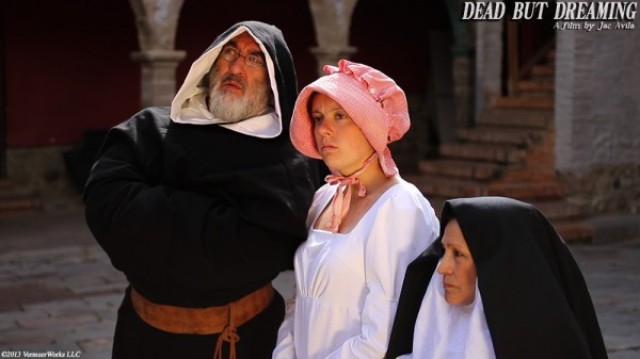
Uncle and niece

Uncle and niece

The attempted sacrifice of a young virgin centuries ago visually intercuts their conversation because it reflects Varna’s circumstances. She is a modern sacrifice because her “womanly condition” demands that she choose between being a bride of Christ or man. To her, they are “sad choices.” The doubting nun-in-waiting wants a third option, to pursue her studies and write.

Ferenc admits with some pride that Varna has a “talent for deep thought,” not something the sexist church attitude concedes lightly. He does, however, want her to know about the tale of Lilith. This is the root of the female vampire and a lesson in obedience for all women.

Later when Varna meets the Irish traveler, another element is added to the feminist theme: rebellion against authority, something that Church and society believes should never clutter the female mind.

The replacement sacrifice

The replacement sacrifice

Time Portal

The scene shifts back to the virgin sacrifice. Suddenly her place is taken by a mysterious woman who materializes out of a stone portal.

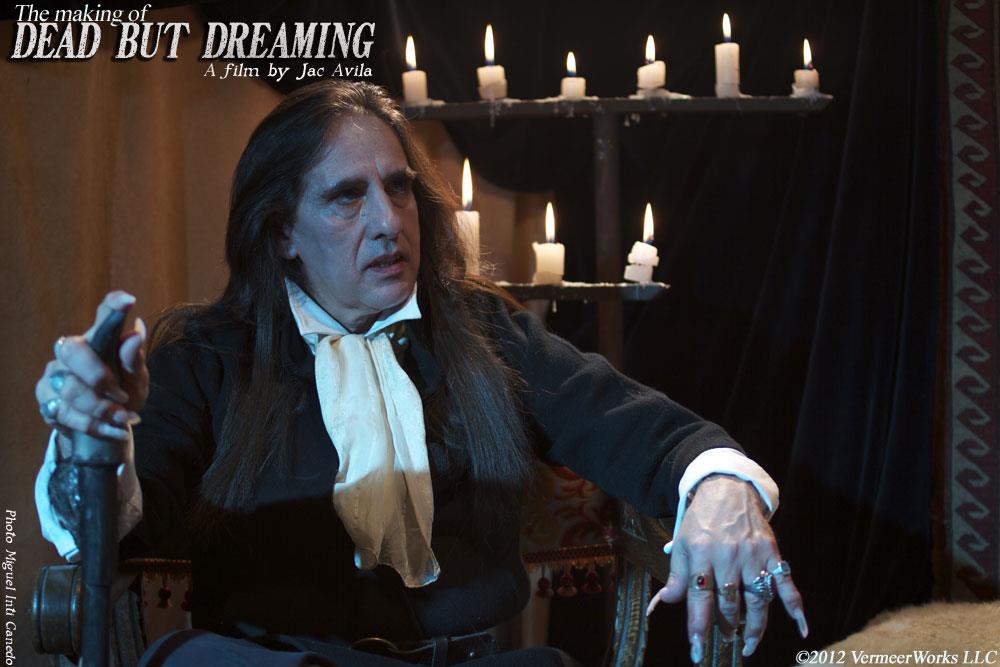
After a stake is driven through the victim’s heart, the chieftain (Jac Avila) drinks her blood. When he extracts the stake, the fiend rises and returns the favor. Thus the tribal leader is reborn as Asa who will become part of the vampire family feud that infuses the narrative.

The undead victim, now known as Nahara, flees to the time portal only to find there is no escape. Once clad in white, the seminude and bloodied Nahara has gone from purity to evil. Like Eve driven from the Garden, she must wander.

DBD00290200

To underscore the pre-Christian birth of vampires, Nahara later appears before Ferenc standing in front of a stone cross. It has no adverse effect on her, Bram Stoker notwithstanding. In Dead But Dreaming, vampires sweep away the oppressive church dogma.  Through asserting the female voice, today’s modern feminists do likewise in a male-dominated world that still minimizes women.

Breaking the Rules too Easily

Another scene shift takes the viewer to La Paz and Asa’s underground lair.

He stays away from the sun (a concession to Stoker) and carries a staff with a large tooth-like object on its end.

dead 15

The back story of this segment moves to Antioch in 57 BC where the slave Aphrodisia is blamed for a lost mirror. In the presence of a congenial group of her mistress’s friends, she is flogged and then crucified.

DBDMakingOfAle0449

As mentioned  previously, Asa is present and turns her into a vampire as she dies on the cross.

In his lair, Asa suggests to Aphrodisia (who is now his personal aphrodisiac) that she still holds a grudge from centuries ago. She retorts that no one helped her, but the vampire lord is disinterested in her complaining. Traveling is on his agenda, he says, which means she’ll have to be put to sleep.

467198_332799253445452_1618416711_oAhprodisia pleads, “I don’t want to be dead but dreaming so long again.”

It’s an angry comment on the condition of women through the ages. Asa’s patriarchal response is unsympathetic. It’s time for a lesson in obedience.

Pushing her away with his staff, Asa chains Aphrodisia to the wall and flogs her in a scene that BDSMers will love. She breaks the rules too easily, he shouts. Aphrodisia writhes; her raging eyes glare at him with desire. Quick sharp breaths intensify her lust, underscoring that sadomasochism ignites vampire love.

DBD00392616-600x337

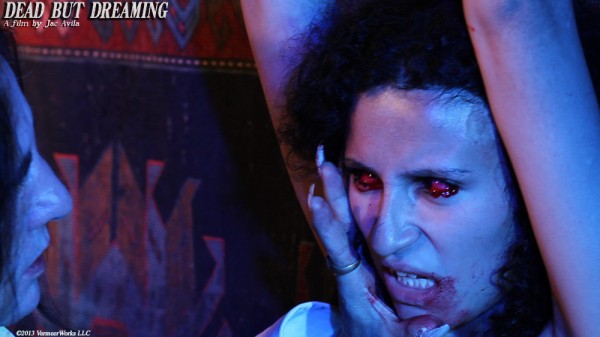
When Asa plunges his pointed staff into the flesh above both of her breasts, their sexual playtime begins. Burning with fury, Aphrodisia’s eyes turn red and bleed as a woman might under those circumstances.

The scene is female rage at oppression and parallels Moire’s jail cell rape we’ll discuss in the next post.

To Be on Top, at least Once

Asa releases Aphrodisia and lays her on the floor then moves on top of her to suck the blood from the piercings he made. In an act of rebellion, Aphrodisia suddenly reverses positions and straddles him by sitting on his chest.

This is one of Dead’s pivotal moments because it was Lilith who demanded to be on top in an assertion of her feminism. Aphrodisia’s statement of sexual control yields a concession. Asa will not put her to sleep and mute her again.

*          *          *

Next we’ll look at the sad fate of Moire and another of the film’s defining moments, her scourging, execution, and rebirth.

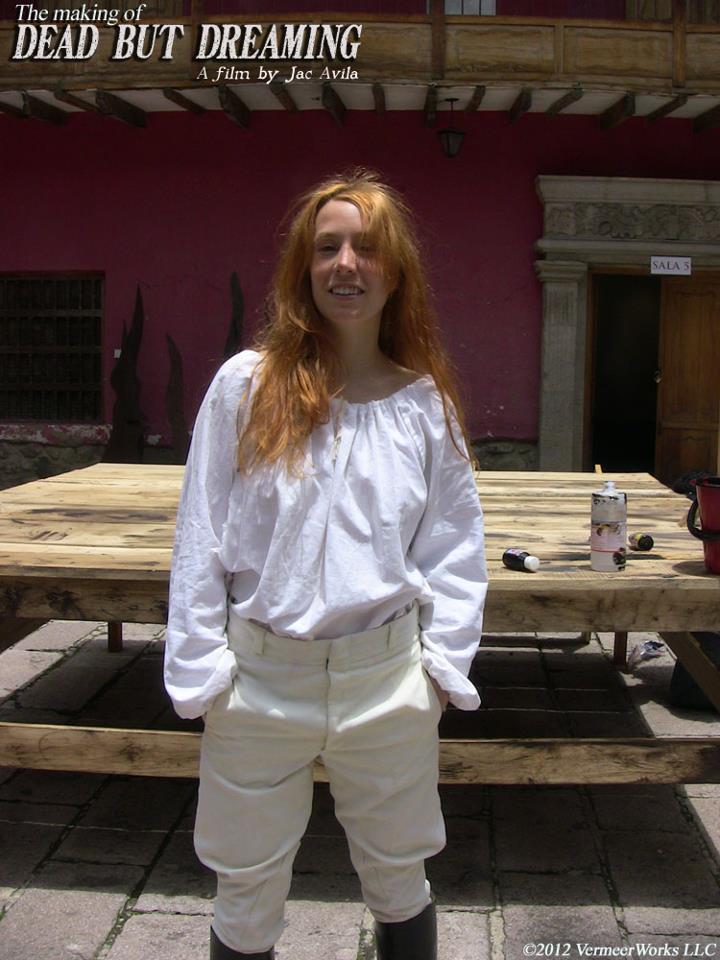
Amy Hesketh in a calm moment before Moire's public humiliation

Still dressed, Amy Hesketh is calm and collected as the set is ready for Moire’s public humiliation. It will be Amy at her most intense in a moving performance.


Leave a comment

Filed under Uncategorized

Dead But Dreaming, Part 1: Blood and Desire

by Rich Moreland, May 2016

This is my first attempt to deconstruct a film outside the adult genre. I happened across producer/director/actress Amy Hesketh’s work and decided to give one of her recent films, Dead But Dreaming, a go.

Amy is a ground breaker, portraying the archetypal innocent victim with an honest, understated talent for eroticizing her peril.

I don’t use a rating system for the films I review, but if I did this movie would be a five-star winner. It’s that good.

SPOILER ALERT: If you’d rather not know what happens in this film, stop now and go play on twitter!

dead 11


Succubi

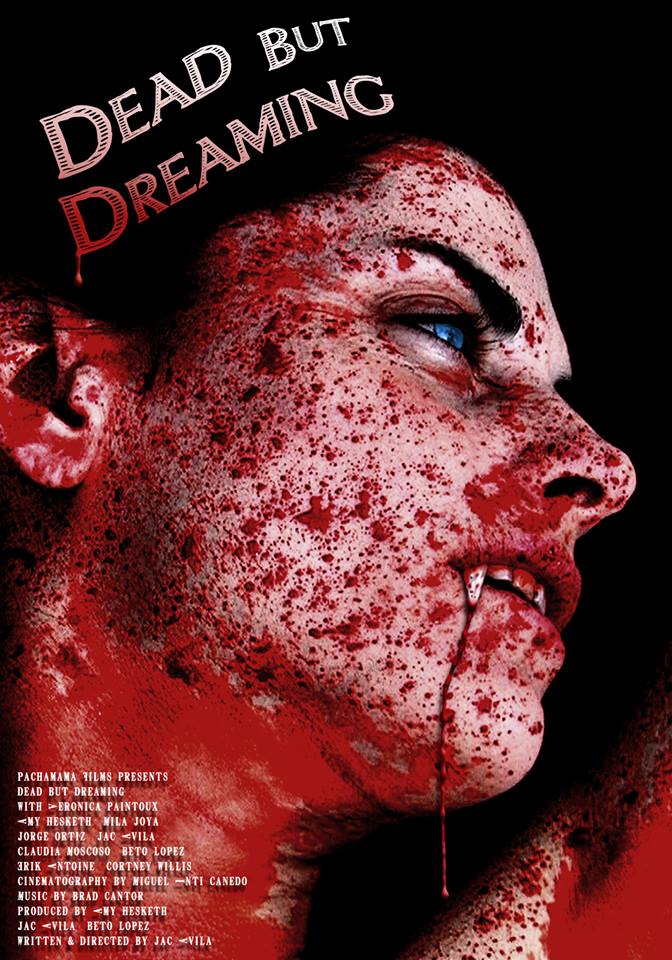
Dead But Dreaming is a vampire tale. It has a feminist underpinning that slashes religious and political conservatism while skewering the belief that a woman’s place is under the male thumb.

The back story begins with Lilith, Adam’s first wife. A priest named Ferenc explains to his niece, convent novice Varna, that Lilith refused to submit to Adam and was replaced by the more docile Eve.

The Priest

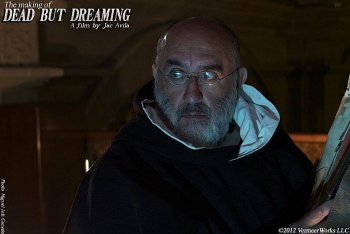
Jorge Ortiz as The Priest

Actually, the Lilith myth originated in pre-Christian Mesopotamia (modern-day Iraq) and entered Hebrew text in the sixth century BCE.

In Greek mythology, Lilith becomes the Lamia, eater of children and concubine of Zeus. Later she appears in European folklore as the succubi, the seducer of men. Thus we see female vampires in nineteenth century La Paz feasting on the city’s young lads which is Ferenc’s explanation for the mysterious murders that have come to town.

dead 16

Incidentally, Bram Stoker’s 1898 novel Dracula weaves into vampire lore the blood, sex, and death theme we see in Dead. The Irish author’s Victorian rendition establishes the vampire tropes we’ve grown accustomed to, such as recoiling from daylight and crucifixes. For its part, Dead gives a subtle nod to Stoker Moire, who is also Irish.

Considering that the Lamia pre-date Christianity, director Jac Avila scraps some of the typical expectations. For example, Nahara can flit around in sunlight and travel as she pleases. What’s more, the vampires of Dead skirt any retribution from Christianity, though Ferenc does manage to impale Nahara with a crucifix to slow her down.

By the way, producer Amy Hesketh pays tribute to Stoker with “blood is about life force and desire.” Her words underscore the erotic theme of Dead played out magnificently with nudity and sadism. Best of all, the film is a collective love affair for the viewer. Actresses Veronica Paintoux, Mila Joya, and especially Amy Hesketh, are irresistible. As simultaneous victims and empowered women, they exude a delicious sexuality that becomes the narrative.

Veronica Paintoux as Nahara

Veronica Paintoux as Nahara

Faraway Lands

Writer/director Jac Avila wraps Dead around the mystical archetype of three. There are a trio of female vampires: Nahara (Paintoux), Aphrodisia (Joya), and Moire (Hesketh) and three historical settings to weave the story.

Each time period is a part of the puzzle the viewer assembles along the way.

The tribal chieftain (Jac Avila) embraces Nahara

The tribal chieftain (Jac Avila) embraces Nahara

The first deals with the tribal “birth” of Nahara, a visitor from a “faraway land” who finds passage through a time portal. Moire will metaphorically do the same in 1805, the far off land being Catholic Ireland.

The second is Antioch in 57 BCE. The characters in this setting are Greek, though the power of the coming Roman Empire is on their doorstep. The second vampire, Aphrodisia, is born out of the Roman tradition of slave crucifixion.

In Antioch

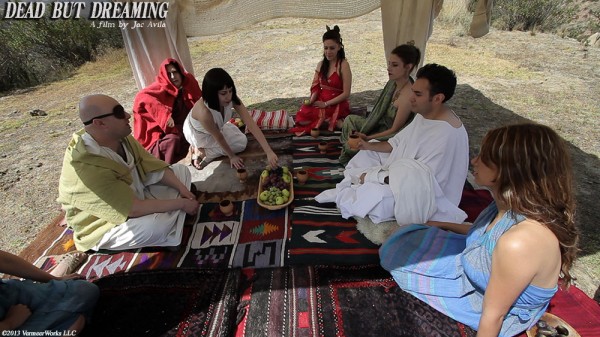
The slave Aphrodisia offers fruit to visitors

When we arrive at the film’s present time, La Paz is a part of Upper Peru. The Bolivian War of Independence is a few years away but the rebels are organizing. The Irish traveler, Moire O’Higgins, who plans to help the freedom fighters build their arsenal, will suffer a scourging and death that links her to Aphrodisia’s Roman punishment.

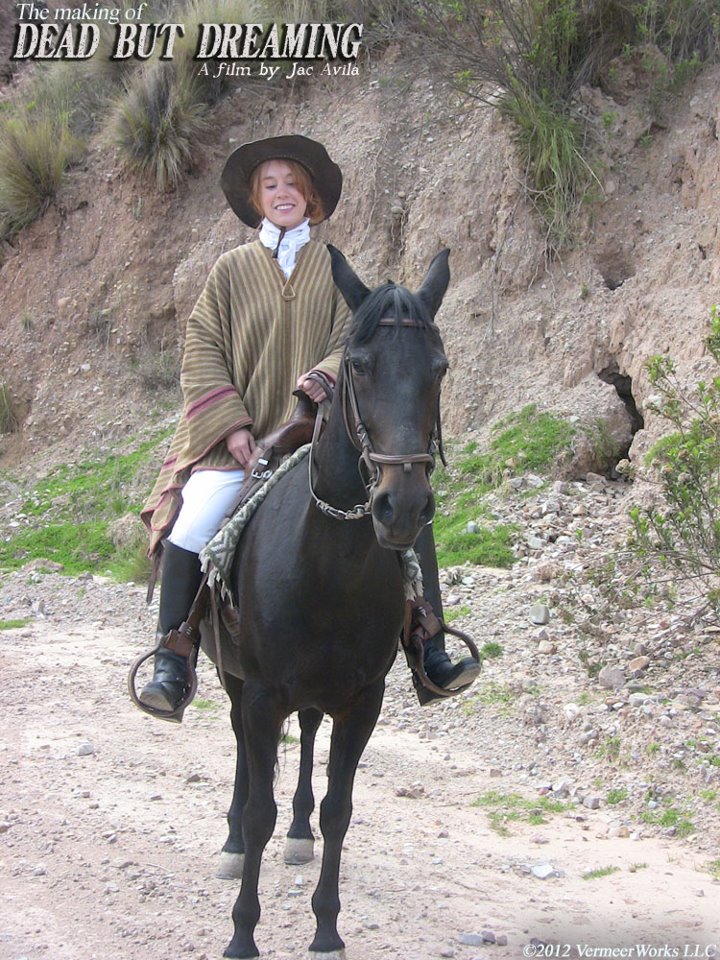
Amy Hesketh is the Irish Traveler

Amy Hesketh is the Irish Traveler

Speaking of crucifixion, there are three, one for each female vampire.

Finally, the central male vampire, Asa (played by Avila) encompasses three distinct roles. He is the tribal leader in prehistoric times and the visitor who will suck the blood of the slave Aphrodisia while she is on the cross.

Waiting for Asa

Waiting for Asa

Most important, however, is 1805 La Paz where Asa is a vampire lord in pursuit of, and being pursued by, Nahara in what looks like a family feud. Their maneuverings become the central theme of the story.

Finally, as referenced above, the past and present in Dead are interspersed with scenes from the various time periods. As the film moves forward, the intercutting can appear befuddling, but with close attention the sub-narratives skillfully come together.

Mila Joya as Aphrodisia

Mila Joya as Aphrodisia

The next post explores the film’s feminism theme.

*          *        *

Dead But Dreaming is an indie production from Pachamama Films and distributed through Vermeerworks. It is available for online streaming or DVD purchase.

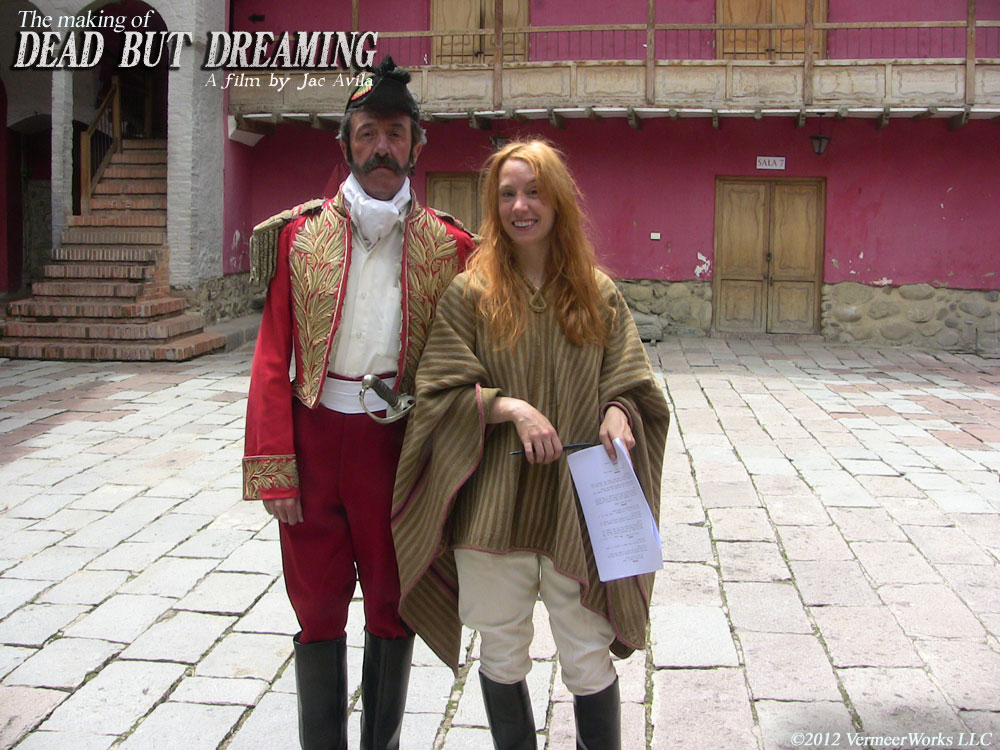
Producer Amy Hesketh with script in hand

Producer Amy Hesketh with script in hand and cast member close by


Leave a comment

Filed under Uncategorized