Tag Archives: Jac Avila

Olalla, Part One: A Half-Lingering Terror

by Rich Moreland, July 2016

Olalla is an erotic horror film from Pachamama Films and Decadent Cinema. The movie is written and directed by Amy Hesketh. The dialogue is a combination Spanish and English and comes with the option of closed captioning.

Based on Robert Louis Stevenson’s short story by the same name,  Amy’s adaptation weaves Stevenson’s tale into a visual narrative so compelling that I believe it is worthy of academic study.

Though I don’t use a rating system for my reviews, I highly recommend Olalla.  The film is available from Vermeerworks and Amazon.

In this first post, we look at Olalla from a back story perspective.

*          *          *

1991712-gfRobert Louis Stevenson published “Olalla” as a short story in 1885. It’s the first person account of an unnamed English officer wounded in war, most likely Napoleon’s 1807-1814 Peninsular Campaign in Spain. The soldier recuperates at a “residencia” belonging to a once noble family.

Remnants

When he arrives, the officer learns the remnants of the family consist of a mother who is “sunk in sloth and pleasure,” a “very cunning, very loutish” son named Felipe, and a daughter, Olalla, whose presence is felt but not seen.

Upon first encountering Felipe, the soldier finds him to be “a child in intellect [and] stunted in development.” He also describes him as secretive, perhaps being more than he seems. All the while, the daughter remains a mystery.

During his stay, the Englishman notices a portrait of a woman in his bedroom. She appears, by way of her antiquated dress, to be “long since dead.” Nevertheless, she is striking in an ominous way, causing the soldier to remark that “to love such a woman were to seal one’s own sentence of degeneration.”

As time passes, the portrait begins to “cast a dark shadow” on him. He is thankful the woman is “safe in the grave,” then comments, “And yet I had a half-lingering terror that she might not be dead after all, but re-risen in the body of some descendant.”

Reacting to his uneasy feelings, the officer concludes the ‘family blood’ seemed to be “impoverished,” probably from inbreeding, and accounted for the strangeness of Felipe and his mother.

How they are connected to the portrait remains vague, but the soldier’s lengthening stay at the residencia reinforces his growing anxieties.

Bestial Cries

The Englishman eventually meets Olalla and they develop a rudimentary friendship.

The story’s turning point occurs when the soldier cuts his hand opening a casement window. Seeking help he approaches the mother only to have her fall upon him and bite his hand “to the bone.” He fights her off but she pounces again “with bestial cries” similar to those that had previously awakened him in the night. Felipe and Olalla appear and rescue him.

With the Felipe’s assistance, the soldier departs the home to find shelter in a local village. While there, he engages the old padre and asks about Olalla and her family. Not a good idea, apparently, because the village atmosphere becomes toxic for the Englishman. The residents avoid his presence which he attributes to their superstitions. Eventually, he strikes up a conversation with a “gaunt peasant” and learns that a villager died at that “house of Satan” where the family lives, though how and why is unknown. The soldier dismisses the story as more superstition.
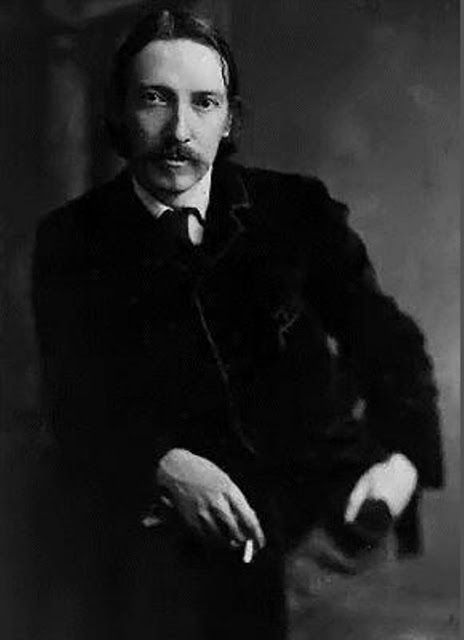
Robert Louis Stevenson

Robert Louis Stevenson

The officer and Olalla meet a final time on a pathway that has a crucifix at its summit. Olalla has stopped to pray.

She thought he had gone, she says, and urges him to do so because the longer he stays the closer death stalks him and her family. Olalla knows the locals are aware of his love for her and that is dangerous.

When her prayers are finished, Olalla implores the Englishman to look up at the “Man of Sorrows.” She mentions the “inheritors of sin” and how everyone must endure a past “which is not ours.”

Though he is no Christian, the soldier is struck by her message. All sacrifice is “voluntary,” he laments, and “pain is the choice of the magnanimous,” so it’s “best to suffer all things and do well.”

Moving on, the Englishman heads “down the mountain in silence.” He turns to look back and sees Olalla “still leaning on the crucifix.”

Is this a Vampire Tale?

Victorians loved enigmatic storytelling because it protected sensibilities and forced uncertainty upon the reader. For example, there’s Henry James’ The Turn of the Screw. Is it a ghost story about possessed children or just the fertile imagination of a young governess who is a psychological wreck?

On the other hand, when Bram Stoker’s Dracula is published about the same time as James’ work (1897-98) subtleties are put aside. The vague becomes obvious.
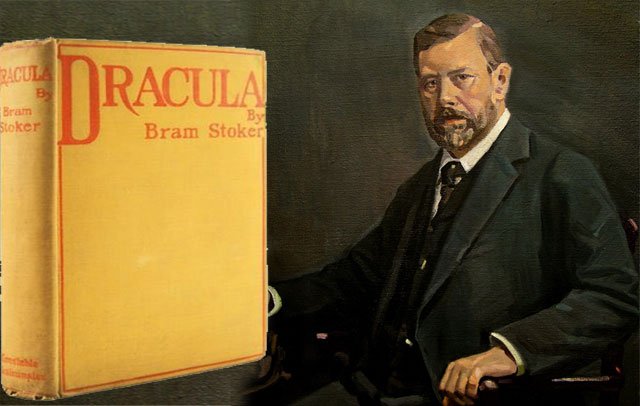
Bram-Stoker-3

We know Dracula’s bites are metaphors for the erotic and necessary to accommodate Victorian temperament, but the rest is pretty straightforward, a fantasy complete with fangs, a sun phobia, no reflections in mirrors, and on and on.

Hollywood has made a fortune on the Stoker model.

With Stevenson’s “Olalla,” we are left with a burning question? Is this a vampire tale or just a story about a deviant family of blood fetishists mixed with religious overtones and village superstition? Challenging, of course, because none of the standard Stoker’s mechanisms are in place and rightly so since Stevenson’s narrative predates Stoker by over a decade.

My inclination is go with the fetish explanation because everybody’s got one of some sort or another. But, of course, that won’t keep you up all night ready to cringe at the least gust of cold wind or that strange creature crawling up the wall of your bedroom.

The Grand-Guignolth
As for Amy Hesketh’s adaptation of Stevenson’s Victorian imagination, well, it’s pure Amy which means it’s innovative and terrific.

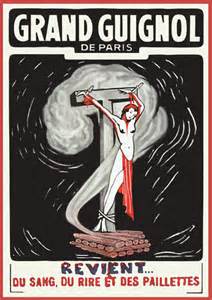
One more thought, I’m guessing Amy is a fan of Paris’ Theater of Horror, the Grand-Guignol (1897-1962), where amorality, brutality, sex, and insanity crept onto the French stage with just the right infusion of gore.  No supernatural here, it’s all realism at work.

As Amy Hesketh fans know well, she relishes whippings, crucifixions, rack torture, and burnings too much to rely exclusively on the supernatural as her literary modus operandi. Realism is her performance art and what stands her tall in the crowd of horror directors and storytellers.

*          *          *

Having introduced Robert Louis Stevenson, we’re now ready for the next post on this marvelous film. We’ll take a look at the vampire question a little further.
1 Comment

Filed under Uncategorized

Dead But Dreaming, Part 4: Horror or History?

by Rich Moreland, May 2016

jacIn reviewing Dead But Dreaming, I have taken a limited perspective. The film, however, is rich with unexplored layers of meaning that beg for further interpretation. That’s the true measure of art and a salute to director Jac Avila’s innovative work.

*          *          *

Crucifixion and Confrontation

Dead But Dreaming is a film of contrasts and parallels in a narrative driven by the ordeals of Aphrodisia and Moire.

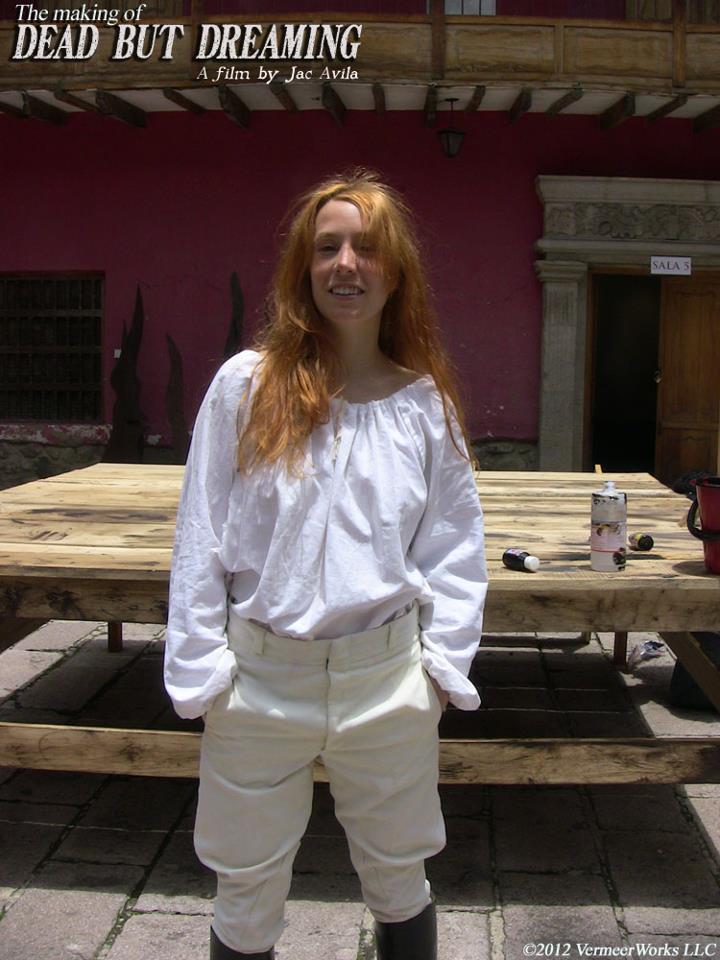
They come from distant lands but their appearances are quite different. Moire’s fair complexion and reddish blonde hair is a counterpoint to Aphrodisia’s fiery exotic look framed by her black hair and paradoxically sad eyes.

As we’ve seen, both are sexually assaulted while bound. Aphrodisia responds with anger; whereas, a stoic Moire endures her trauma.

DBD00365718

On the other hand, both victims are visually eroticized when they are punished. Their differences lie in their humiliation, Moire’s being public, Aphrodisia’s the fate of a slave.

The story’s three crucifixions are also contrasting. Aphrodisia suffers a slave’s death on a cross; Moire is the victim of political persecution while Nahara faces an interrogation with a religious overtone (notice the wound in her side inflicted by a wooden crucifix).  Does vampirism feed off Christian mythology and is that what frightens the priest Ferenc so much?

DBDMakingOf9903

Though Moire is resigned to her fate, Aphrodisia and Nahara are angry. Nahara pulls at the chains securing her to a box-like metal frame in an underground cavern compliments of Ferenc’s mission to stamp out evil.

Speaking of the priest, he and Nahara trade confrontational stares throughout the film in a reminder of Dr. Van Helsing’s pursuit of Dracula in the Bram Stoker novel. In effect, they are mythological parallels in contrasting poses.

Who is Varna?

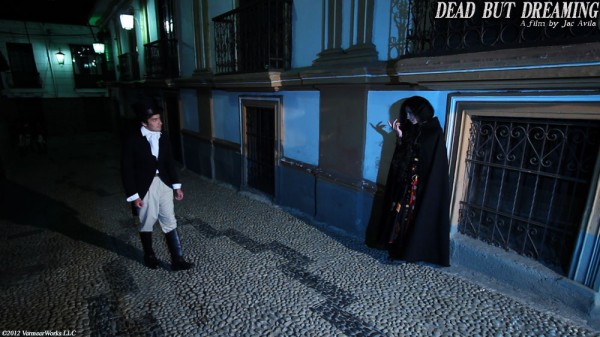
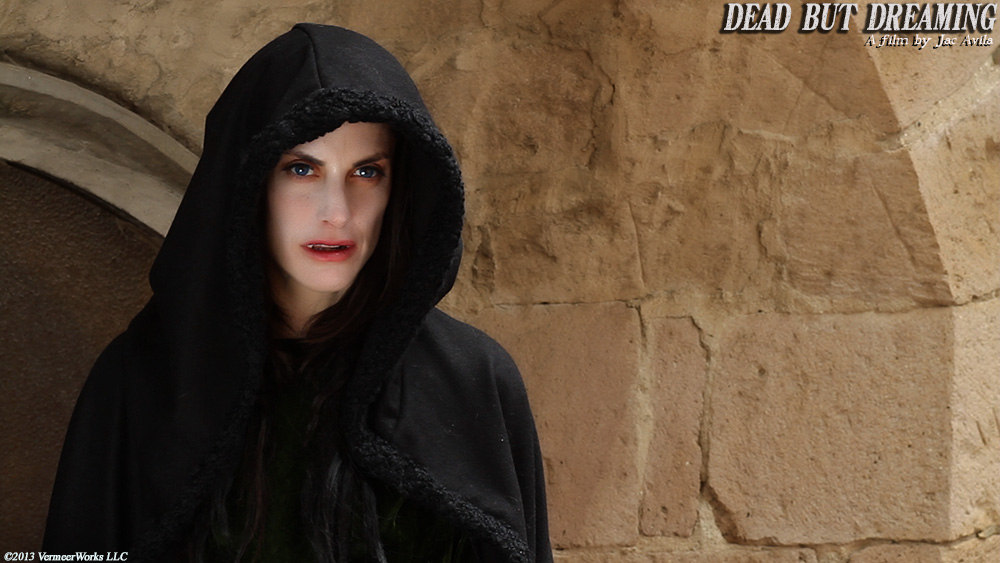
Varna, dressed in civilian clothes, meets Moire on the street with a less than astonished,  “You’re dead.” Moire’s now eternal state does not appear to surprise the former nun-in-training because she can no longer dismiss the supernatural.

463647_323430181049026_2101279728_o

Moire is concerned for Varna.

When I was dead but dreaming, Moire says, “I heard you,” referring to Varna’s promise to carry on her mission, and “I don’t want you to take my place.”

 Varna is warned. Stay out of the revolution because the whipping post awaits, and seek the church as a shield from Nahara, who has a talent for turning those who pray into prey.

DBD01235910-600x337

Wasted words because Varna is the independent woman celebrated by feminism. She makes her own decisions but will be forever hounded just as feminists have always suffered society’s condemnation.

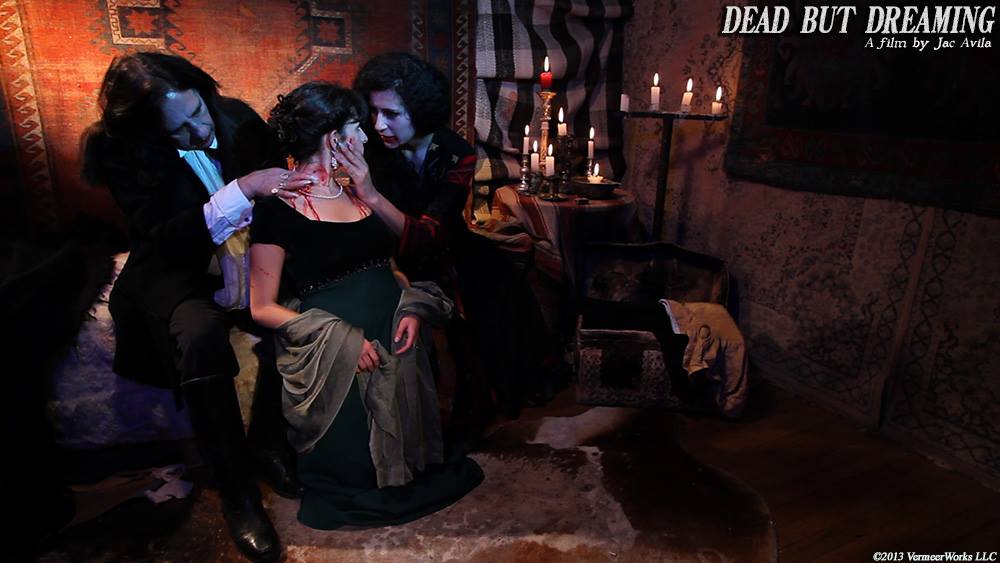
As the film winds down, Varna  is seduced by Aphrodisia and ends up in the lair where earlier the vampires feasted on a local woman.

dead 8 in the lair

Rather than taste Varna’s virginity, Asa releases her in a nod to the next installment of Dead But Dreaming.

“She will lead us to Nahara,” he says to Aphrodisia.

dead 17

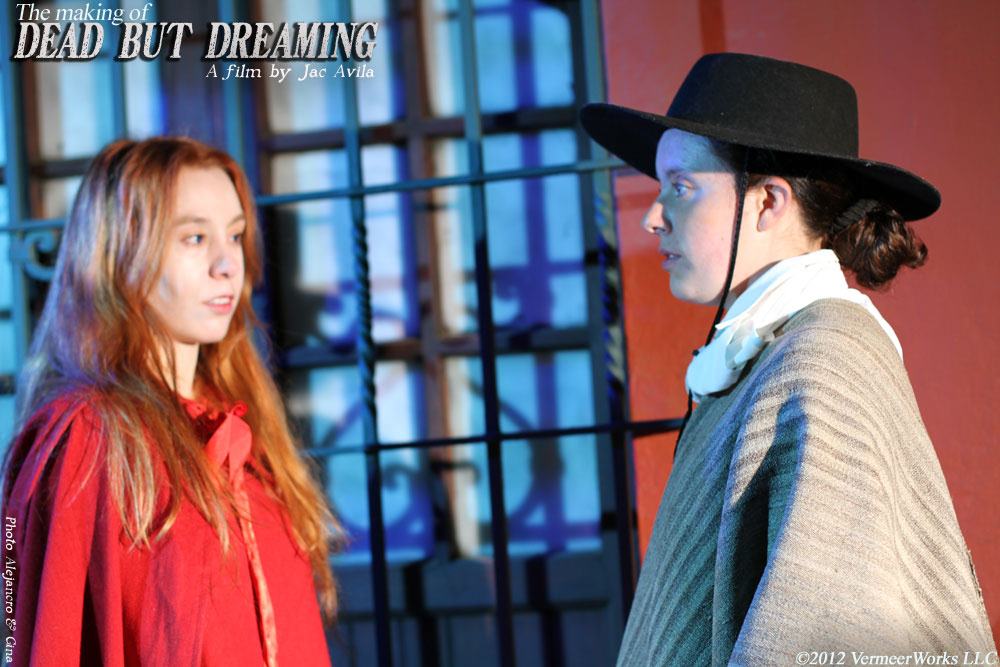
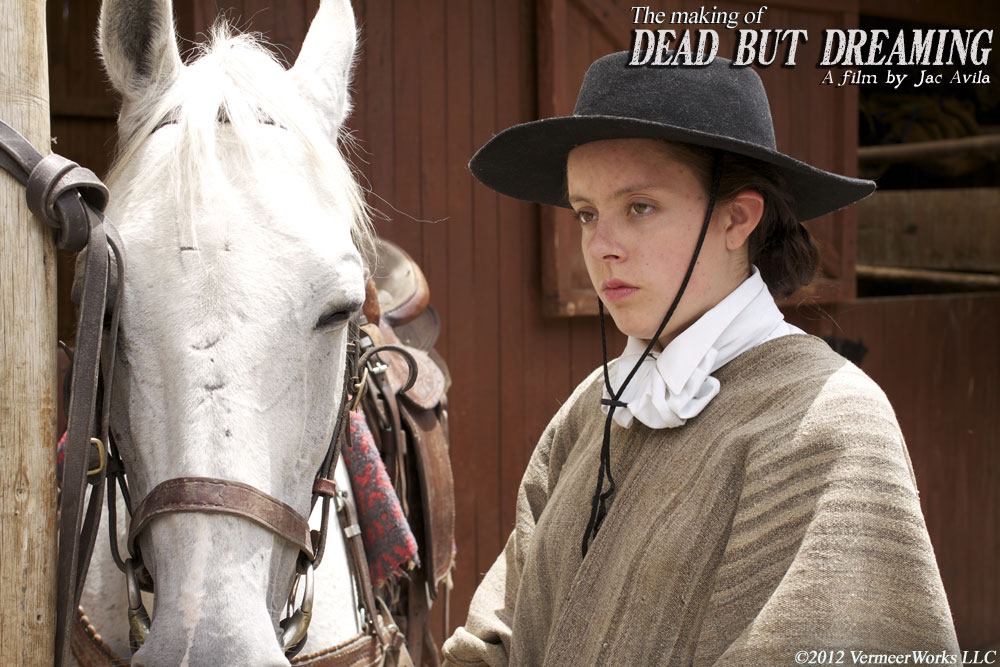
Unexpectedly, Varna shows up at the stable and wants to join Moire, who was anticipating Nahara’s arrival. The viewer learns that the Lamia was killed by Ferenc. But she cannot die, Moire says matter-of-factly, and we know what that means . . .

As they ride away, the Irish traveler warns Varna, “She will find us someday.” It’s a cat and mouse game playing out in vampire land.

So who is Varna?

 Throughout the film, this novice nun cannot look away, cannot confine herself to the safety of her cultural box because she sees perspectives beyond her own personal vision. She is the observer.

Simply put, Varna is us.

Budgets

Finally, Dead has endearing touches that make the film a pleasure.

Director Jac Avila cautions us to not go too far in willfully suspending our disbelief. Granted we are dealing with an indie film that suffers expected budgetary constraints that limit retakes. The upside of that inadvertently breaks the theatrical “fourth wall” by letting the viewer in on the game.

Here are a few really cool examples.

Though the sacrificial virgin in beginning (10,000 years ago) keeps her mouth closed, her metal braces are still visible. A close-up Moire’s feet at the whipping post reveals her pedicure. And in a vampire attack on a La Paz street, Aphrodisia loses one of her fake nails.

I love this stuff because nobody can waste a dollar in the indie business. If anything, it’s an artistic challenge Hollywood cannot appreciate.

Blue

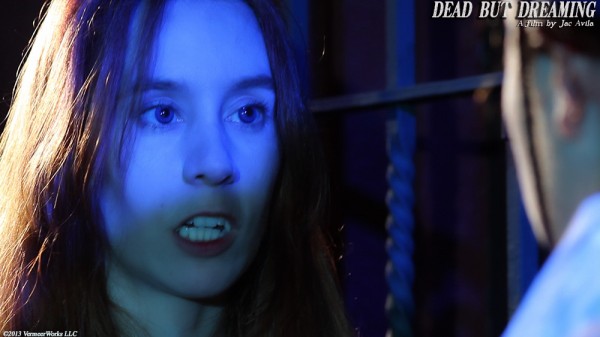
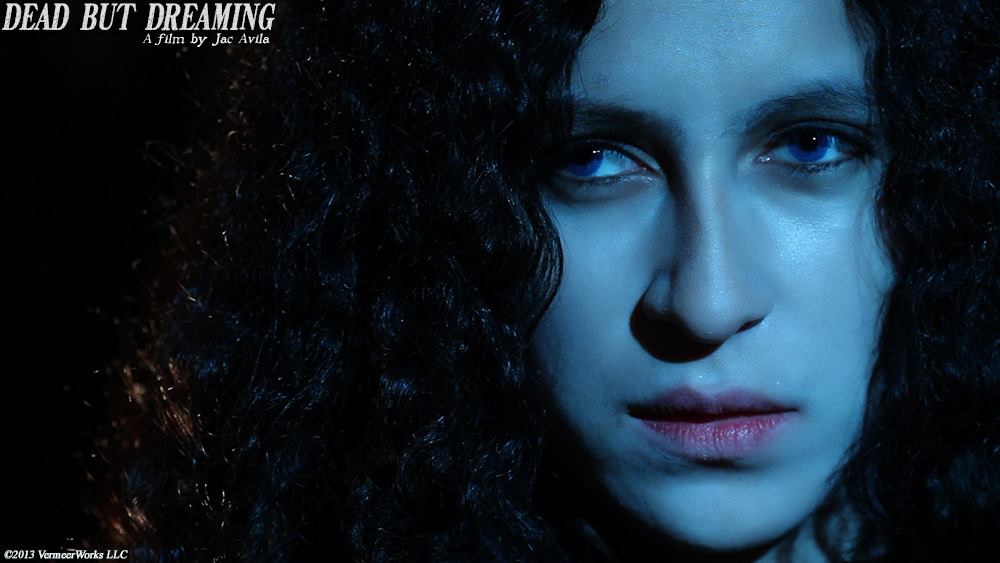
I’m left with only one question. Why do the vampires have blue eyes?

dead 9 blue eyes

Is blue a dreaming state because it is peaceful? Or, is “vampire blue” sad and depressing?

I’ve got a theory. In the Bram Stoker tradition, vampires are condemned to come out at night and, of course, can never again inhale the light of day. So the undead must carry the blue sky in their eyes as a cruel joke; their dilated black pupils push aside the ever present, but forbidden, daytime to see at night.

Another take on the color suggests the “eternal light” of Church doctrine must always be vigilant. Hence the blue crucifix hanging on the church wall and the street scenes shot in a blue hue.

Vampire blue ready to feast

That First Bloody Bite

In closing, my congratulations to the entire production team of Dead. The cinematography is impressive and captures costumes and settings that are authentic representations of La Paz in 1805.

Dead’s pace is lively and the intercutting supremely done to bring the story together. Only once did I think the movie strained itself. The extended scene between Demetrius and Chrysis in Antioch tended to drag with a somewhat flat dialogue delivery. But in the overall scheme of things, that’s minor.

The Irish traveler descends the path with Nahara not far behind

The Irish traveler descends the path with Nahara not far behind

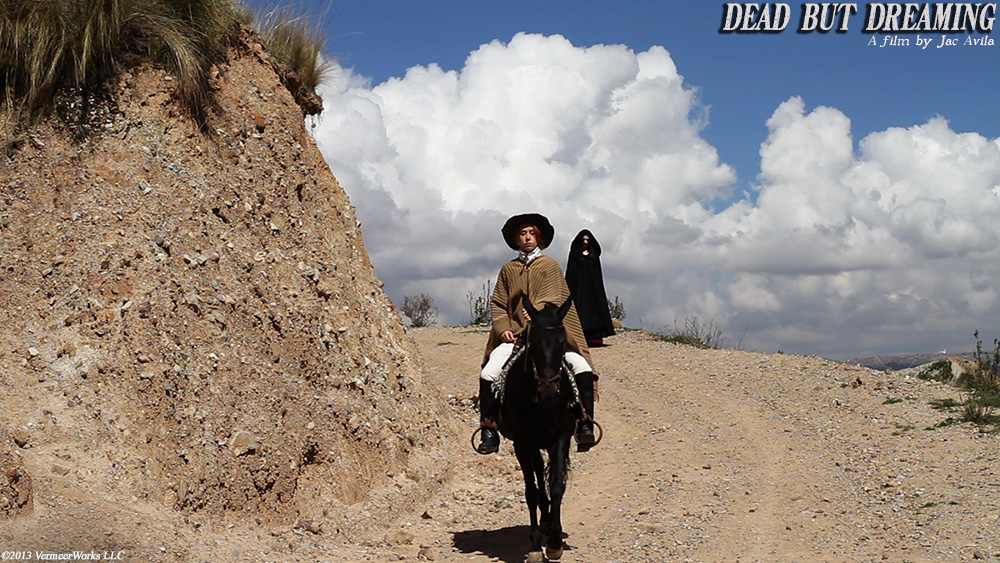
Incidentally, the opening credits offer a clever  indication that this film has a tale to tell. The motif is about travelers who are descending into something we do not yet know. Moire rides her horse down a path and is followed by the mysterious Nahara. When the scene shifts to Asa’s first appearance, he is going down a hill.

DBD00002712-600x337

Set up the viewer with a suggestion and Dead But Dreaming readies the audience for that first deliciously irresistible bloody bite into a terrific story.

Horror or History?

As I mentioned in the first post on this movie, I am venturing into new territory with this analysis. After repeated viewings, I’m reluctant to call Dead a horror film. It is more of a historical drama armed with a political message wrapped in a supernatural fantasy. Though I agree with Eric Antione who characterizes the movie as a “gothic adventure story,” I think it goes deeper than that. Much like Maleficarum, another Amy Hesketh film about victimization, Dead condemns a society that condemns women.

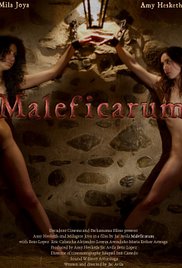
MV5BMTk5MDQyNzM4NV5BMl5BanBnXkFtZTcwNzk2ODUxNw@@._V1_UY268_CR3,0,182,268_AL_Speaking of  Maleficarum, two young women are tortured under the sadistic auspices of the Church because they don’t fit in. Amy and Mila Joy are innocent victims whipped, racked, and bloodied in realistic scenes. Yet, Maleficarum is not gratuitous violence. The film depicts the abuses society brings on those who drift away from the norm. Watch it with Arthur Miller’s The Crucible in mind because Jac Avila’s script and Miller’s story are based on real accounts.

The dungeons of Maleficarum offer Amy and Mila with their nudity and their punishments as treats for the sadomasochistic crowd. Dead dances around the edges of that arena with the same erotic S/M theme that permeates Maleficarum. Does that position both films in a special genre of horror, history, and softcore porn? Perhaps, but that may be a stretch (no rack pun intended), so check out both films and decide for yourself.

What I do believe is what Dead But Dreaming does so well, replay the female oppression theme of Maleficarum with a more forceful feminist message.

*          *          *

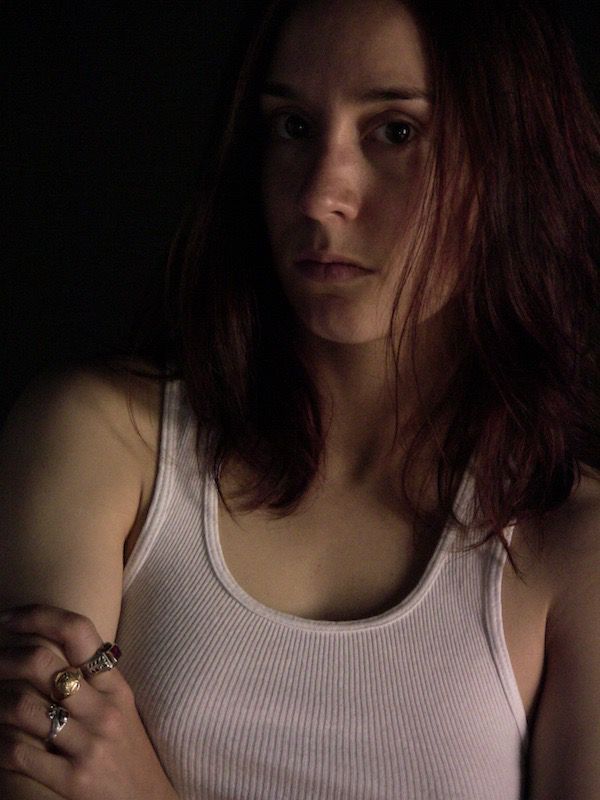
AmyHeskethI hope to review another Amy Hesketh production. She is a breath of fresh air unknown to many film fans.

For my tastes, any performer who comments on her nudity with, “My body is my instrument so I’m going to use it,” is quietly telling us she is more than attractively packaged female flesh.

Amy Hesketh is smart, talented, and lusts after each scene she shoots.

Congrats on a great movie and here’s betting that there’s a Dead II in the works.


2 Comments

Filed under Uncategorized

Dead But Dreaming, Part 2: Lamia

by Rich Moreland, May 2016

Joining Amy Hesketh in Dead But Dreaming is Bolivian Veronica Paintoux who began her career with Pachamama Films in the early 1990s and La Paz native Mila Joya is who has shot for the studio since 2010. She stars with Amy in Maleficarum, a film directed by Jac Avila.

These three provocative women, along with Claudia Moscoso as Varna, infuse feminism into the vampire landscape, giving Dead But Dreaming an empowered pro-woman statement.

Claudio Moscoso

Claudio Moscoso

*          *          *

Throughout recorded history, women have been captured, fought over, enslaved, and seduced for reproductive purposes. The result? Sexual commodification has always been at the core of being female.

Patriarchal attitudes have dominated all cultures with the Church in the Middle Ages western civilization’s strongest example. But women have fought back and in modern times this struggle has given rise to feminism.

In Dead But Dreaming, writer/director Jac Avila explores the feminist image as it is shaped through the recalcitrant female. She may appear submissive and trapped by her circumstances, but she is of her own mind.

Womanly Condition

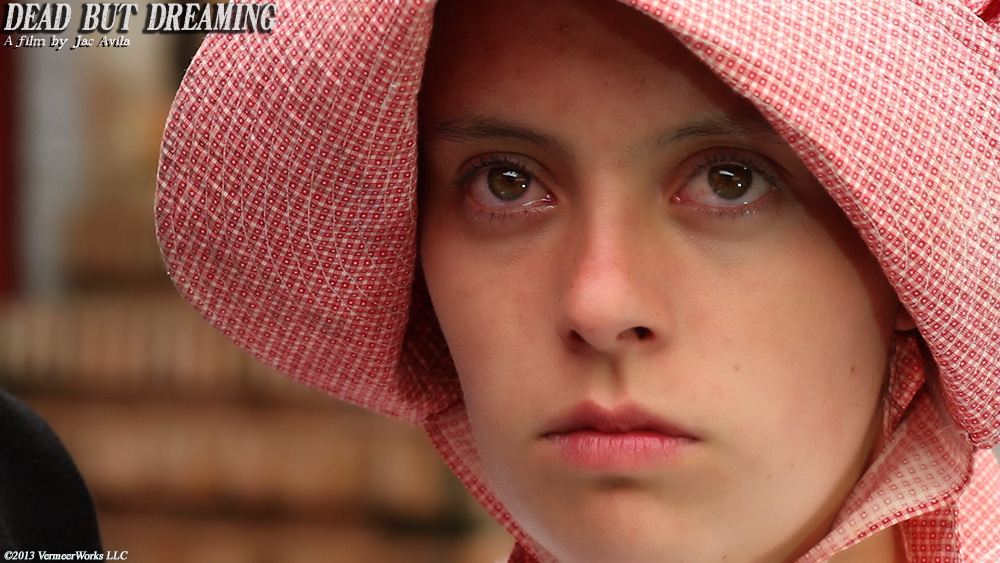
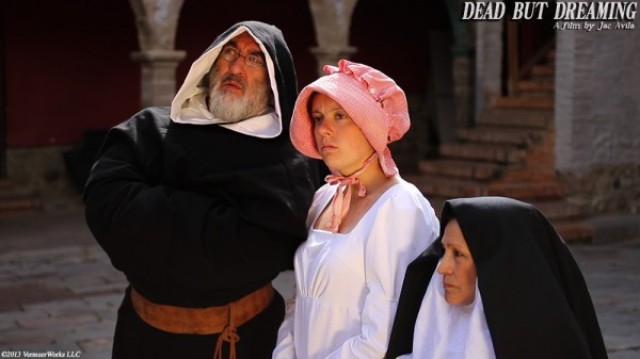
Until the viewer meets Varna, the feminist tone of the narrative floats along under the radar. There are hints, of course, but the novice nun brings the issue front and center. Her uncle, Ferenc, is the local priest and when they meet in the church courtyard he mentions his suspicions.

There is a female vampire, a lamia, loose in the community. “The demon takes a beautiful shape to seduce young men,” he says.

Uncle and niece

Uncle and niece

The attempted sacrifice of a young virgin centuries ago visually intercuts their conversation because it reflects Varna’s circumstances. She is a modern sacrifice because her “womanly condition” demands that she choose between being a bride of Christ or man. To her, they are “sad choices.” The doubting nun-in-waiting wants a third option, to pursue her studies and write.

Ferenc admits with some pride that Varna has a “talent for deep thought,” not something the sexist church attitude concedes lightly. He does, however, want her to know about the tale of Lilith. This is the root of the female vampire and a lesson in obedience for all women.

Later when Varna meets the Irish traveler, another element is added to the feminist theme: rebellion against authority, something that Church and society believes should never clutter the female mind.

The replacement sacrifice

The replacement sacrifice

Time Portal

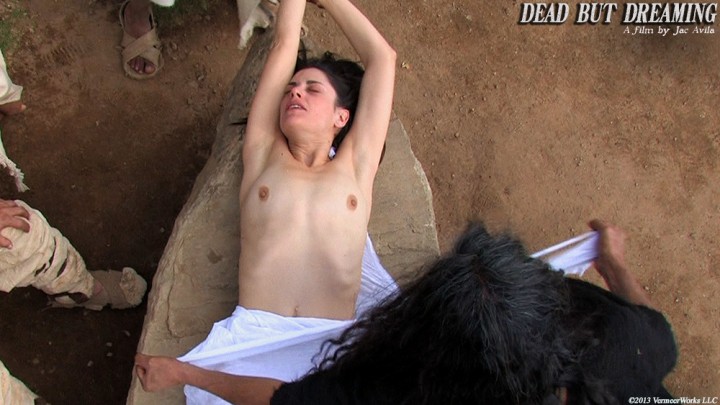
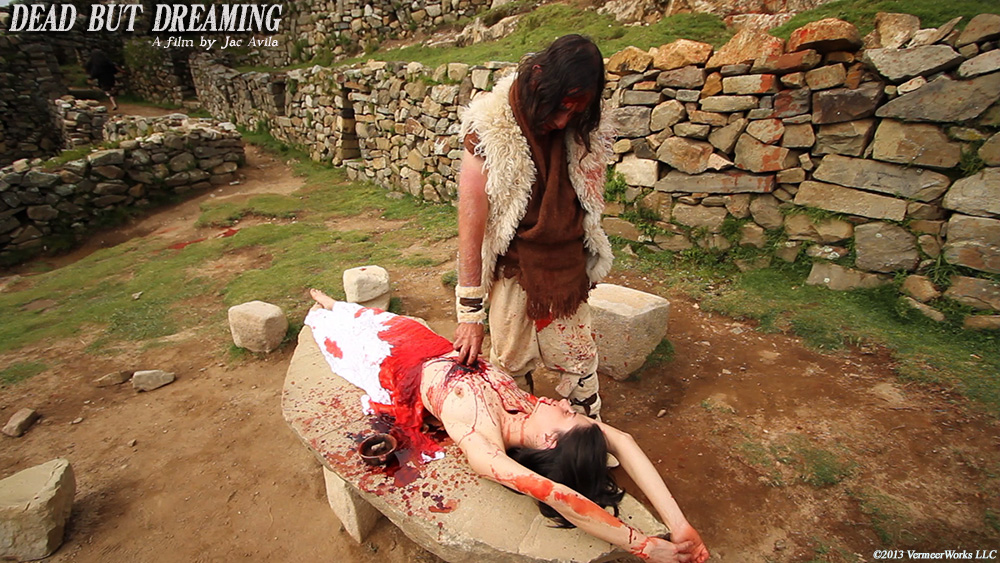
The scene shifts back to the virgin sacrifice. Suddenly her place is taken by a mysterious woman who materializes out of a stone portal.

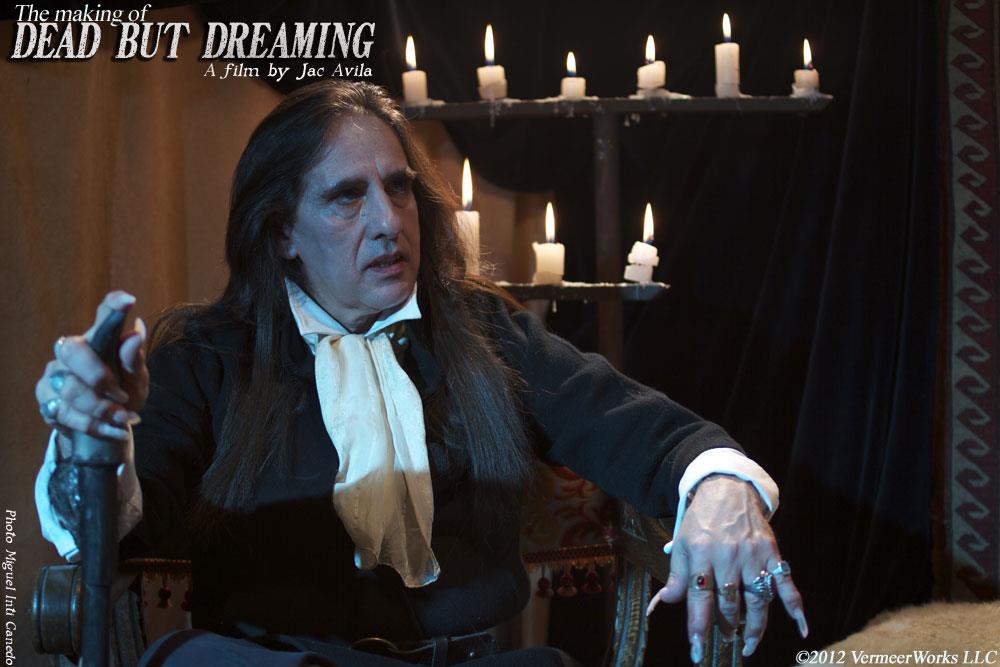
After a stake is driven through the victim’s heart, the chieftain (Jac Avila) drinks her blood. When he extracts the stake, the fiend rises and returns the favor. Thus the tribal leader is reborn as Asa who will become part of the vampire family feud that infuses the narrative.

The undead victim, now known as Nahara, flees to the time portal only to find there is no escape. Once clad in white, the seminude and bloodied Nahara has gone from purity to evil. Like Eve driven from the Garden, she must wander.

DBD00290200

To underscore the pre-Christian birth of vampires, Nahara later appears before Ferenc standing in front of a stone cross. It has no adverse effect on her, Bram Stoker notwithstanding. In Dead But Dreaming, vampires sweep away the oppressive church dogma.  Through asserting the female voice, today’s modern feminists do likewise in a male-dominated world that still minimizes women.

Breaking the Rules too Easily

Another scene shift takes the viewer to La Paz and Asa’s underground lair.

He stays away from the sun (a concession to Stoker) and carries a staff with a large tooth-like object on its end.

dead 15

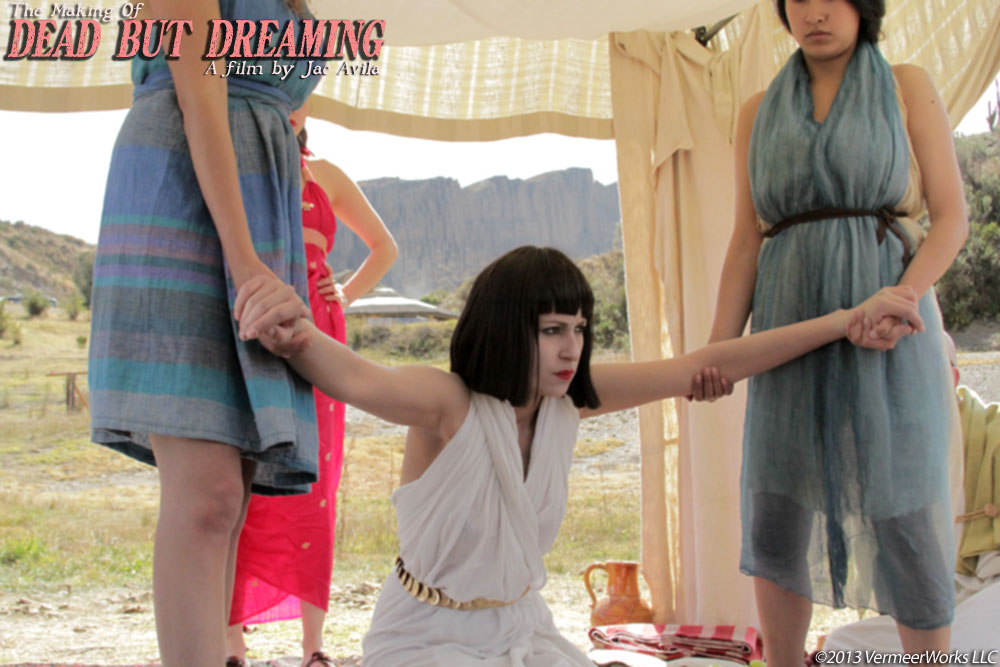
The back story of this segment moves to Antioch in 57 BC where the slave Aphrodisia is blamed for a lost mirror. In the presence of a congenial group of her mistress’s friends, she is flogged and then crucified.

DBDMakingOfAle0449

As mentioned  previously, Asa is present and turns her into a vampire as she dies on the cross.

In his lair, Asa suggests to Aphrodisia (who is now his personal aphrodisiac) that she still holds a grudge from centuries ago. She retorts that no one helped her, but the vampire lord is disinterested in her complaining. Traveling is on his agenda, he says, which means she’ll have to be put to sleep.

467198_332799253445452_1618416711_oAhprodisia pleads, “I don’t want to be dead but dreaming so long again.”

It’s an angry comment on the condition of women through the ages. Asa’s patriarchal response is unsympathetic. It’s time for a lesson in obedience.

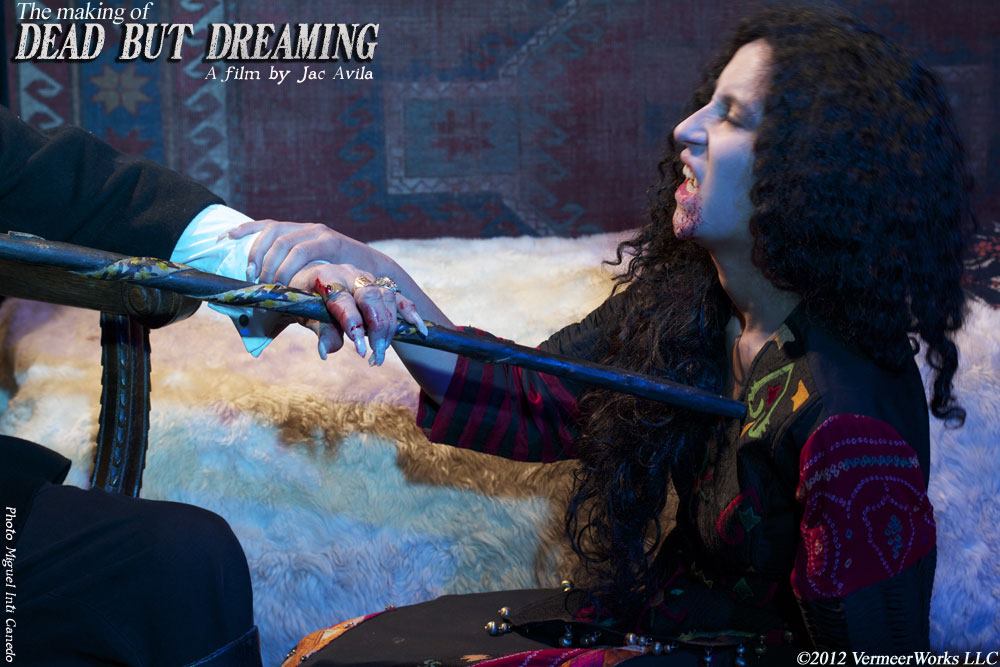
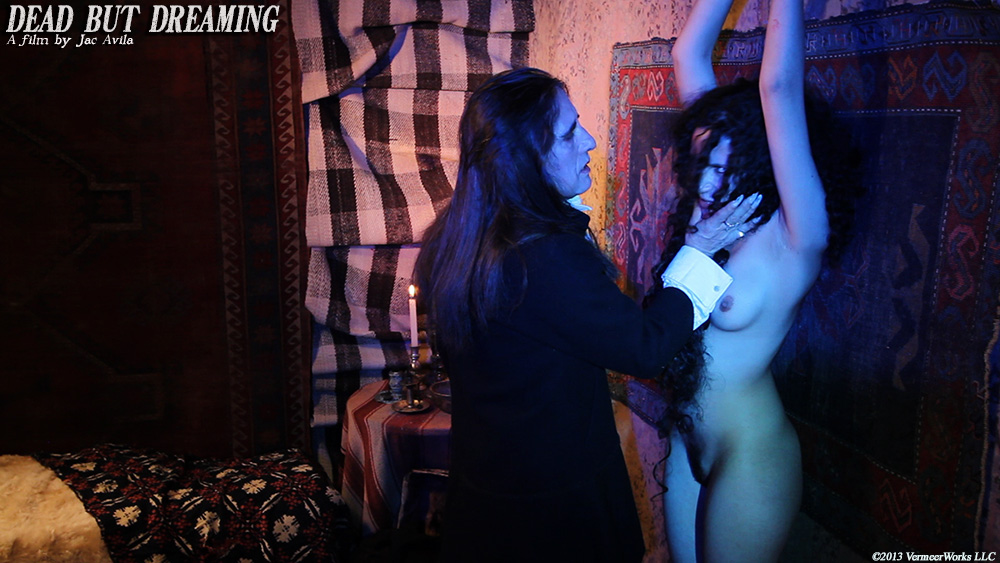
Pushing her away with his staff, Asa chains Aphrodisia to the wall and flogs her in a scene that BDSMers will love. She breaks the rules too easily, he shouts. Aphrodisia writhes; her raging eyes glare at him with desire. Quick sharp breaths intensify her lust, underscoring that sadomasochism ignites vampire love.

DBD00392616-600x337

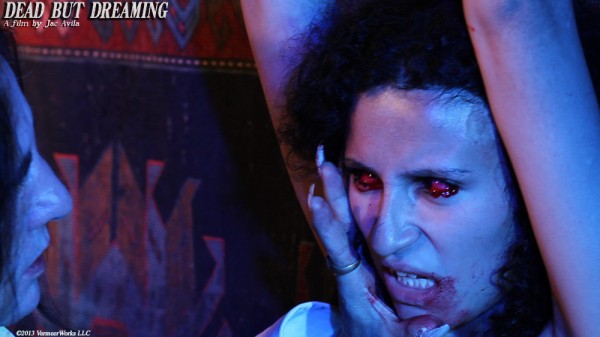
When Asa plunges his pointed staff into the flesh above both of her breasts, their sexual playtime begins. Burning with fury, Aphrodisia’s eyes turn red and bleed as a woman might under those circumstances.

The scene is female rage at oppression and parallels Moire’s jail cell rape we’ll discuss in the next post.

To Be on Top, at least Once

Asa releases Aphrodisia and lays her on the floor then moves on top of her to suck the blood from the piercings he made. In an act of rebellion, Aphrodisia suddenly reverses positions and straddles him by sitting on his chest.

This is one of Dead’s pivotal moments because it was Lilith who demanded to be on top in an assertion of her feminism. Aphrodisia’s statement of sexual control yields a concession. Asa will not put her to sleep and mute her again.

*          *          *

Next we’ll look at the sad fate of Moire and another of the film’s defining moments, her scourging, execution, and rebirth.

Amy Hesketh in a calm moment before Moire's public humiliation

Still dressed, Amy Hesketh is calm and collected as the set is ready for Moire’s public humiliation. It will be Amy at her most intense in a moving performance.


Leave a comment

Filed under Uncategorized

Dead But Dreaming, Part 1: Blood and Desire

by Rich Moreland, May 2016

This is my first attempt to deconstruct a film outside the adult genre. I happened across producer/director/actress Amy Hesketh’s work and decided to give one of her recent films, Dead But Dreaming, a go.

Amy is a ground breaker, portraying the archetypal innocent victim with an honest, understated talent for eroticizing her peril.

I don’t use a rating system for the films I review, but if I did this movie would be a five-star winner. It’s that good.

SPOILER ALERT: If you’d rather not know what happens in this film, stop now and go play on twitter!

dead 11


Succubi

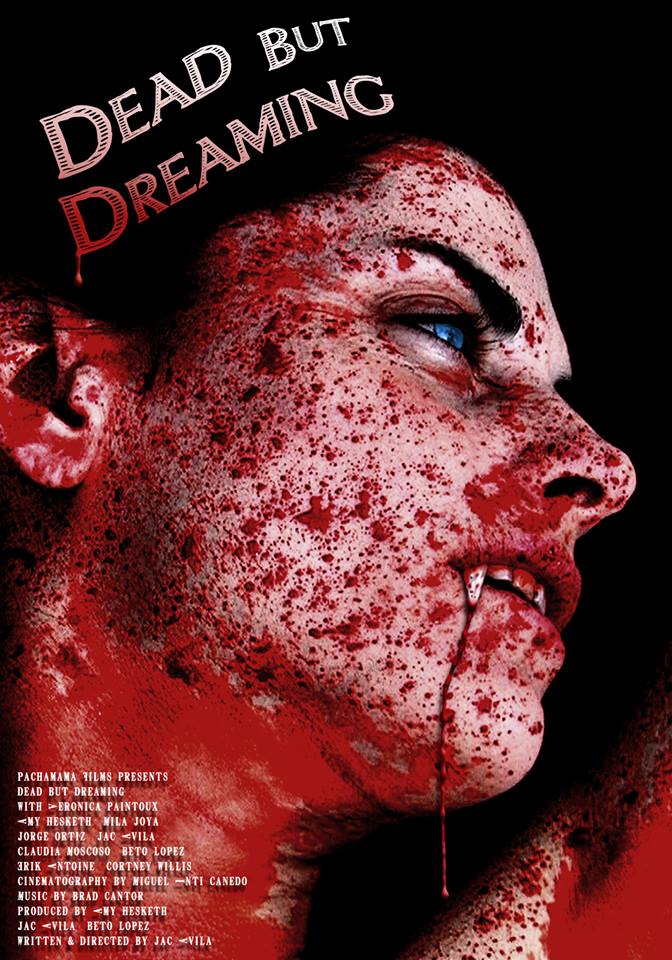
Dead But Dreaming is a vampire tale. It has a feminist underpinning that slashes religious and political conservatism while skewering the belief that a woman’s place is under the male thumb.

The back story begins with Lilith, Adam’s first wife. A priest named Ferenc explains to his niece, convent novice Varna, that Lilith refused to submit to Adam and was replaced by the more docile Eve.

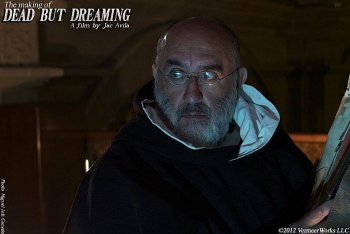
The Priest

Jorge Ortiz as The Priest

Actually, the Lilith myth originated in pre-Christian Mesopotamia (modern-day Iraq) and entered Hebrew text in the sixth century BCE.

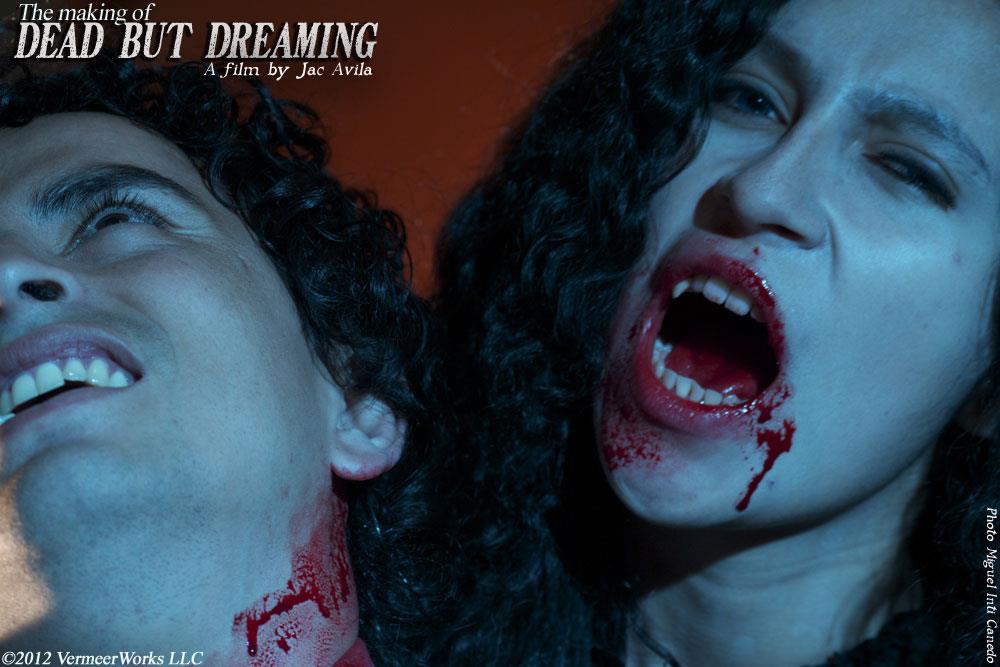
In Greek mythology, Lilith becomes the Lamia, eater of children and concubine of Zeus. Later she appears in European folklore as the succubi, the seducer of men. Thus we see female vampires in nineteenth century La Paz feasting on the city’s young lads which is Ferenc’s explanation for the mysterious murders that have come to town.

dead 16

Incidentally, Bram Stoker’s 1898 novel Dracula weaves into vampire lore the blood, sex, and death theme we see in Dead. The Irish author’s Victorian rendition establishes the vampire tropes we’ve grown accustomed to, such as recoiling from daylight and crucifixes. For its part, Dead gives a subtle nod to Stoker Moire, who is also Irish.

Considering that the Lamia pre-date Christianity, director Jac Avila scraps some of the typical expectations. For example, Nahara can flit around in sunlight and travel as she pleases. What’s more, the vampires of Dead skirt any retribution from Christianity, though Ferenc does manage to impale Nahara with a crucifix to slow her down.

By the way, producer Amy Hesketh pays tribute to Stoker with “blood is about life force and desire.” Her words underscore the erotic theme of Dead played out magnificently with nudity and sadism. Best of all, the film is a collective love affair for the viewer. Actresses Veronica Paintoux, Mila Joya, and especially Amy Hesketh, are irresistible. As simultaneous victims and empowered women, they exude a delicious sexuality that becomes the narrative.

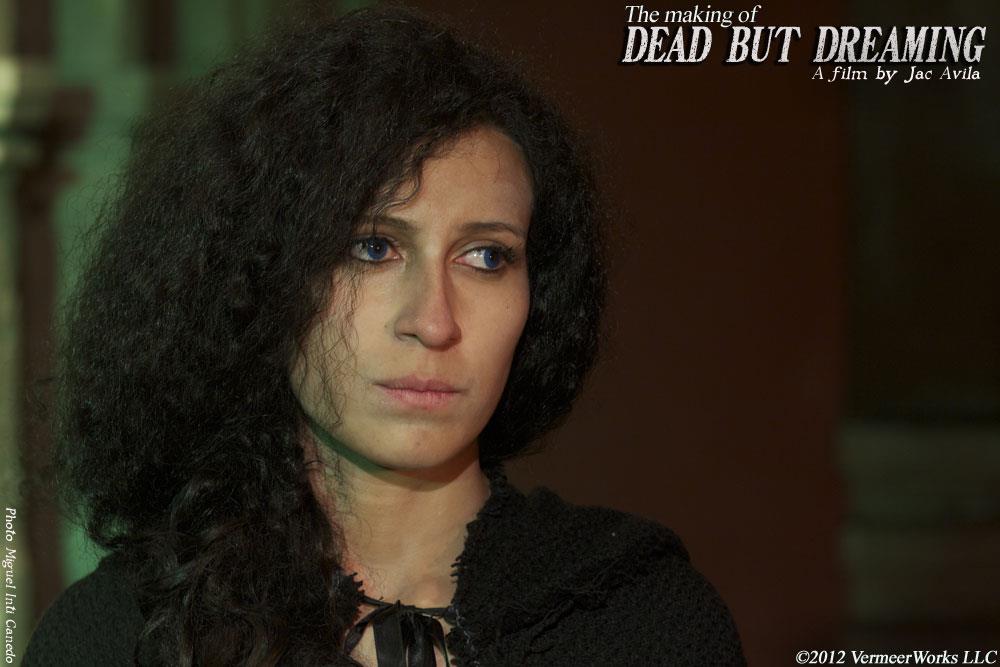
Veronica Paintoux as Nahara

Veronica Paintoux as Nahara

Faraway Lands

Writer/director Jac Avila wraps Dead around the mystical archetype of three. There are a trio of female vampires: Nahara (Paintoux), Aphrodisia (Joya), and Moire (Hesketh) and three historical settings to weave the story.

Each time period is a part of the puzzle the viewer assembles along the way.

The tribal chieftain (Jac Avila) embraces Nahara

The tribal chieftain (Jac Avila) embraces Nahara

The first deals with the tribal “birth” of Nahara, a visitor from a “faraway land” who finds passage through a time portal. Moire will metaphorically do the same in 1805, the far off land being Catholic Ireland.

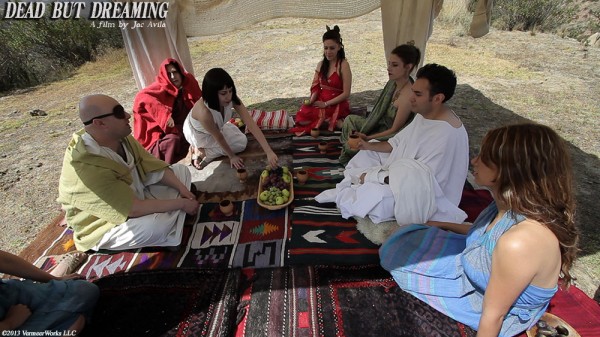
The second is Antioch in 57 BCE. The characters in this setting are Greek, though the power of the coming Roman Empire is on their doorstep. The second vampire, Aphrodisia, is born out of the Roman tradition of slave crucifixion.

In Antioch

The slave Aphrodisia offers fruit to visitors

When we arrive at the film’s present time, La Paz is a part of Upper Peru. The Bolivian War of Independence is a few years away but the rebels are organizing. The Irish traveler, Moire O’Higgins, who plans to help the freedom fighters build their arsenal, will suffer a scourging and death that links her to Aphrodisia’s Roman punishment.

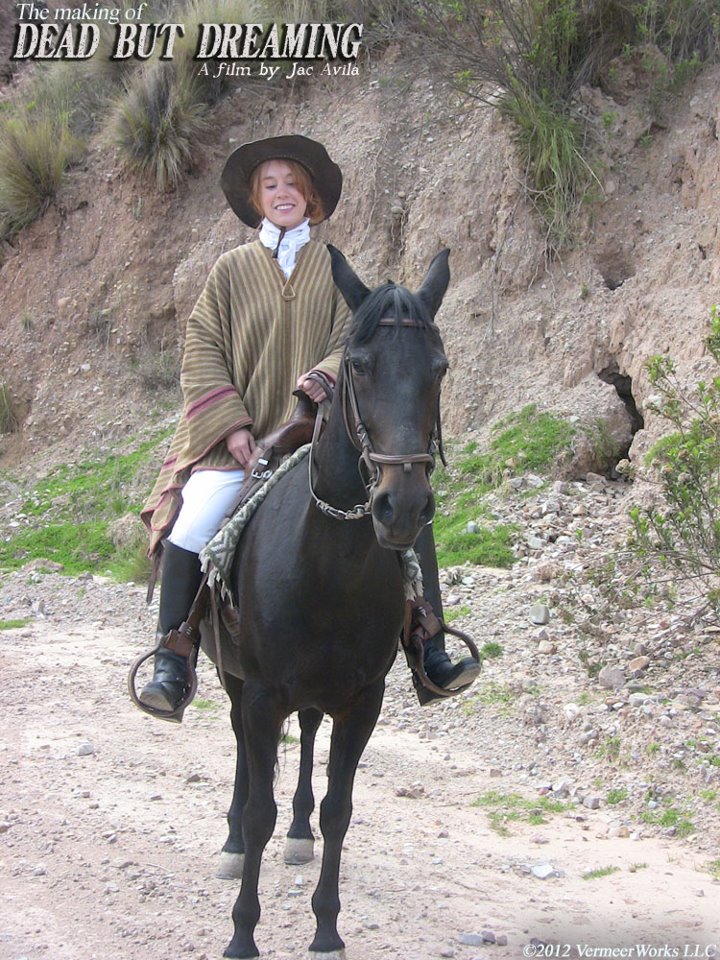
Amy Hesketh is the Irish Traveler

Amy Hesketh is the Irish Traveler

Speaking of crucifixion, there are three, one for each female vampire.

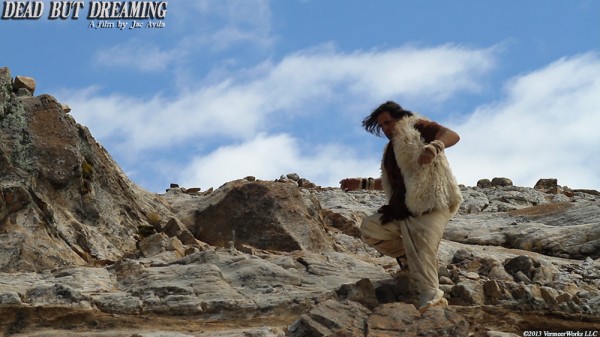
Finally, the central male vampire, Asa (played by Avila) encompasses three distinct roles. He is the tribal leader in prehistoric times and the visitor who will suck the blood of the slave Aphrodisia while she is on the cross.

Waiting for Asa

Waiting for Asa

Most important, however, is 1805 La Paz where Asa is a vampire lord in pursuit of, and being pursued by, Nahara in what looks like a family feud. Their maneuverings become the central theme of the story.

Finally, as referenced above, the past and present in Dead are interspersed with scenes from the various time periods. As the film moves forward, the intercutting can appear befuddling, but with close attention the sub-narratives skillfully come together.

Mila Joya as Aphrodisia

Mila Joya as Aphrodisia

The next post explores the film’s feminism theme.

*          *        *

Dead But Dreaming is an indie production from Pachamama Films and distributed through Vermeerworks. It is available for online streaming or DVD purchase.

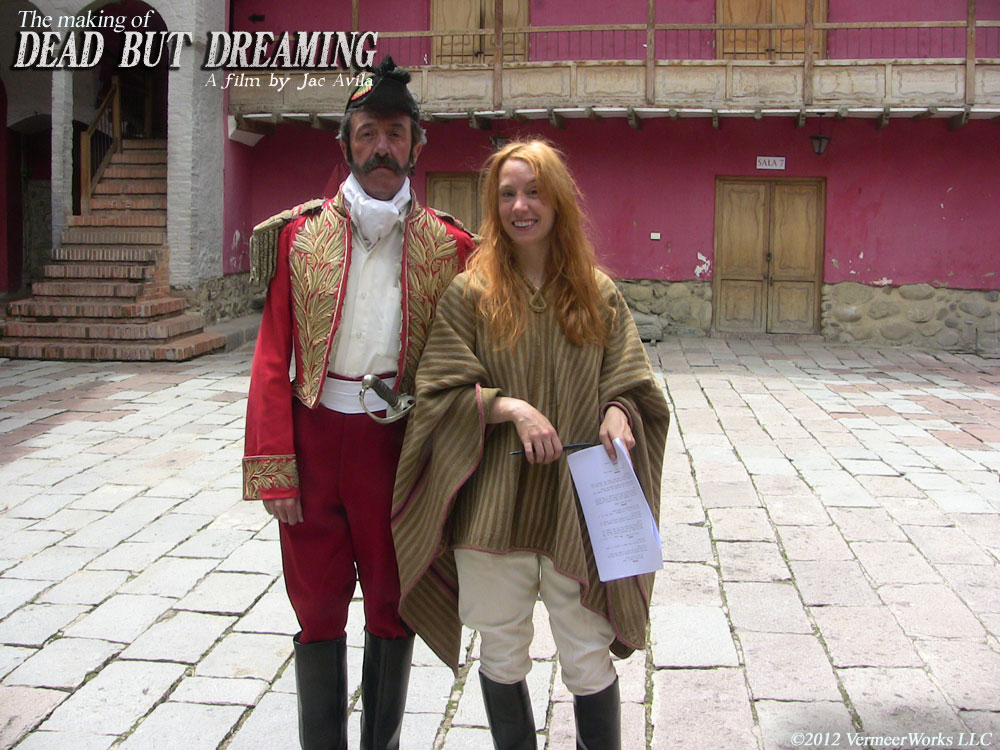
Producer Amy Hesketh with script in hand

Producer Amy Hesketh with script in hand and cast member close by


Leave a comment

Filed under Uncategorized